Karnak Temple Overview
Karnak Temple is one of the most remarkable archaeological sites in the world and the largest religious complex ever constructed by ancient civilization. Located on the east bank of the Nile River in Luxor, Egypt, Karnak Temple represents more than two thousand years of religious devotion, architectural innovation, and political power in ancient Egypt.
Unlike other temples built by a single ruler, Karnak Temple was expanded by dozens of pharaohs over many centuries, making it a living historical record carved in stone. Today, Karnak Temple is considered one of the most important tourist attractions in Egypt and a must-visit destination for travelers interested in history, culture, and ancient architecture.

Where Is Karnak Temple Located?
Karnak Temple is situated in the city of Luxor, formerly known as ancient Thebes, which served as the capital of Egypt during the New Kingdom period.
Key Location Details
- Country: Egypt
- City: Luxor
- Nile Bank: East Bank
- Distance from Luxor Temple: Approximately 2.7 kilometers
Karnak Temple is connected to Luxor Temple by the famous Avenue of Sphinxes, which played a vital role in ancient religious processions.
The History of Karnak Temple
The history of Karnak Temple spans more than 2,000 years, beginning around 2000 BCE during the Middle Kingdom and continuing until the Greco-Roman period.
Pharaohs Who Built Karnak Temple
Many of Egypt’s greatest rulers contributed to the construction and expansion of Karnak Temple, including:
- Senusret I
- Hatshepsut
- Thutmose III
- Amenhotep III
- Seti I
- Ramesses II
Each pharaoh added new pylons, halls, chapels, statues, and obelisks, transforming Karnak Temple into the massive complex seen today.
Religious Significance of Karnak Temple
Karnak Temple was primarily dedicated to Amun-Ra, the king of the ancient Egyptian gods, along with the other members of the Theban Triad.
The Theban Triad
- Amun-Ra: God of creation and the sun
- Mut: Goddess of motherhood
- Khonsu: God of the moon
Karnak Temple served as the spiritual heart of ancient Egypt, where religious rituals, festivals, and offerings were performed daily by powerful priesthoods.
Architectural Layout of Karnak Temple
The Karnak Temple complex covers more than 200 acres and is divided into three main precincts.
The Precinct of Amun-Ra
This is the largest and most significant area of Karnak Temple. It contains the main temples, pylons, and ceremonial halls.
The Precinct of Mut
Located south of the main complex, this area was dedicated to the goddess Mut and includes smaller temples and sacred lakes.
The Precinct of Montu
Dedicated to Montu, the god of war, this section reflects the military power of ancient Egypt.
The Great Hypostyle Hall at Karnak Temple
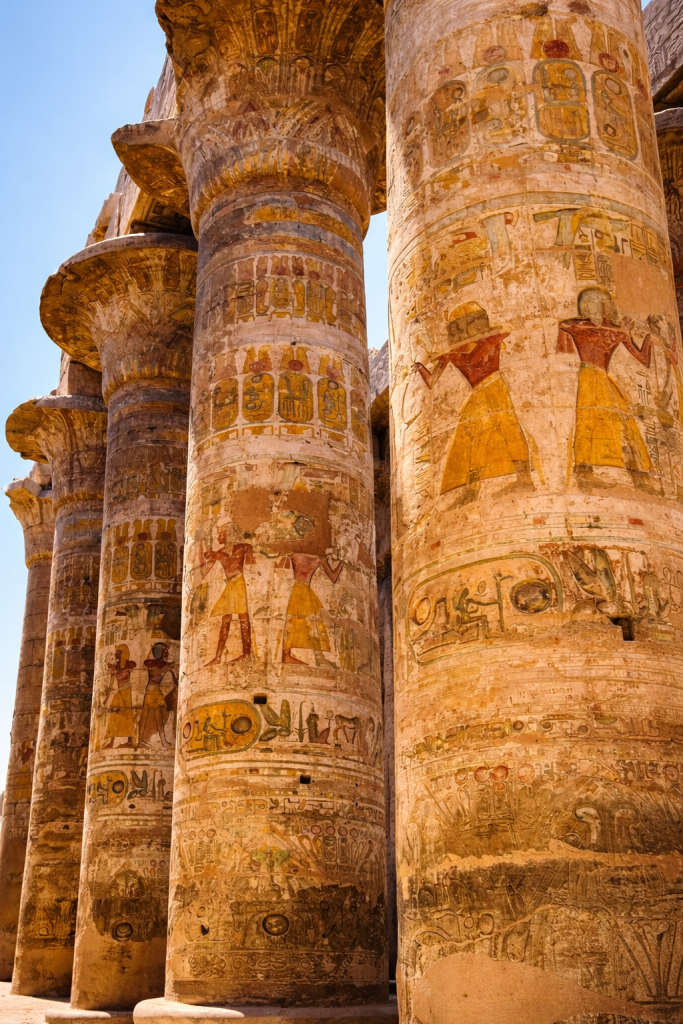
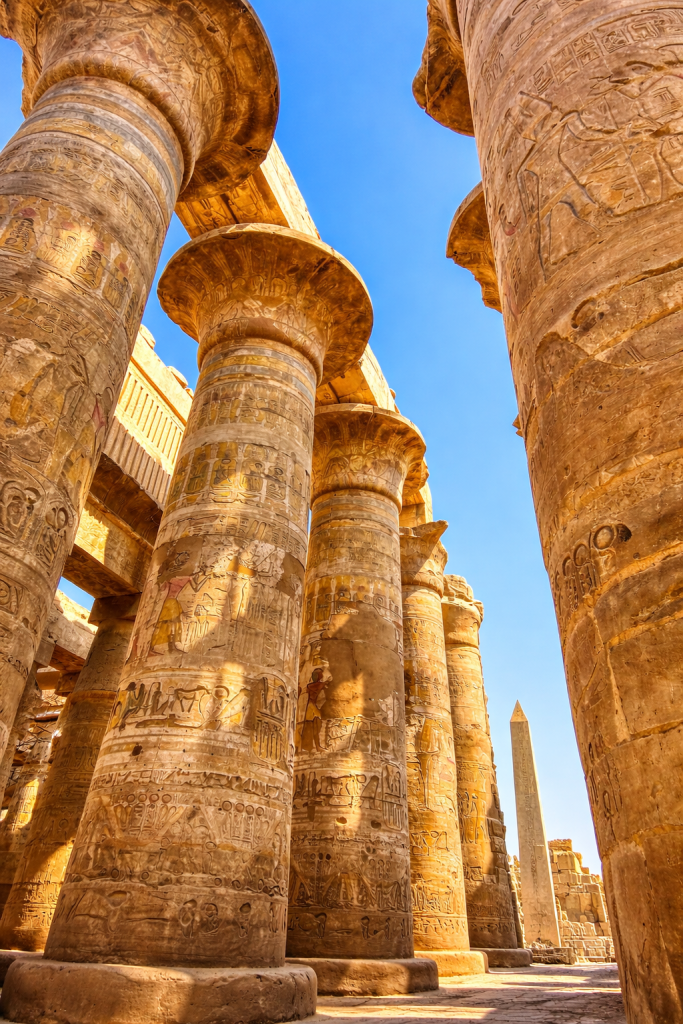
One of the most impressive features of Karnak Temple is the Great Hypostyle Hall, an architectural masterpiece of ancient engineering.
Hypostyle Hall Facts
- Area: Over 5,000 square meters
- Columns: 134 massive stone columns
- Height of central columns: Over 21 meters
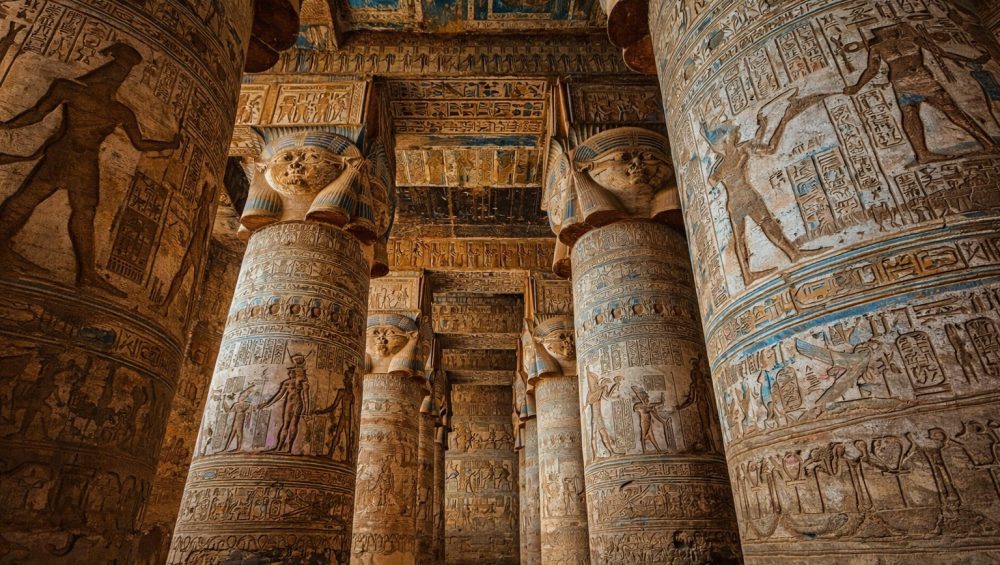
- Decoration: Hieroglyphs and relief carvings
The columns were designed to resemble papyrus plants, symbolizing creation and rebirth in ancient Egyptian belief.
Obelisks of Karnak Temple
Karnak Temple is home to several granite obelisks that once stood as symbols of divine power.
Hatshepsut’s Obelisk
One of the tallest surviving obelisks in Egypt, Hatshepsut’s obelisk was carved from red granite and inscribed with texts honoring Amun-Ra.
Obelisks at Karnak Temple were designed to capture the sun’s rays, reinforcing the connection between the gods and the pharaoh.
The Sacred Lake of Karnak Temple
The Sacred Lake at Karnak Temple played an essential role in religious ceremonies.
Purpose of the Sacred Lake
- Ritual purification of priests
- Symbolic representation of the primordial waters
- Preparation for major festivals
The lake remains one of the best-preserved elements of the Karnak Temple complex.
The Avenue of Sphinxes and the Opet Festival
The Avenue of Sphinxes connected Karnak Temple to Luxor Temple and was used during the famous Opet Festival.
The Opet Festival
During this annual celebration, statues of Amun-Ra, Mut, and Khonsu were carried from Karnak Temple to Luxor Temple, symbolizing renewal, fertility, and divine kingship.
Wall Reliefs and Inscriptions in Karnak Temple
The walls of Karnak Temple are covered with detailed inscriptions that document ancient Egyptian history.
What the Reliefs Depict
- Military victories of pharaohs
- Religious rituals and offerings
- Daily life in ancient Egypt
- Relations between gods and kings
Among the most famous inscriptions are records of the military campaigns of Thutmose III.
Visiting Karnak Temple Today
Karnak Temple is open to visitors throughout the year and remains one of Luxor’s most popular attractions.
Best Time to Visit Karnak Temple
- Early morning to avoid crowds
- Late afternoon for photography
- Evening for the Sound and Light Show
How Long Does a Visit Take?
A typical visit to Karnak Temple lasts between two and three hours.
Sound and Light Show at Karnak Temple
The Sound and Light Show at Karnak Temple offers visitors a unique nighttime experience.
What to Expect
- Illuminated temples and columns
- Storytelling about ancient Egyptian history
- Multilingual narration
This show provides a dramatic way to explore Karnak Temple after sunset.
Why Karnak Temple Is a UNESCO World Heritage Site
Karnak Temple is part of the UNESCO World Heritage Site of Ancient Thebes, recognized for its outstanding cultural and historical value.
Reasons for UNESCO Recognition
- Exceptional architectural scale
- Historical continuity across centuries
- Profound religious significance
Karnak Temple Compared to Other Egyptian Temples
What makes Karnak Temple unique is its immense size and long construction history. No other temple in Egypt matches its scale, complexity, or symbolic importance.
Frequently Asked Questions About Karnak Temple
Is Karnak Temple older than Luxor Temple?
Yes, Karnak Temple is older and significantly larger.
Can Karnak Temple be visited without a guide?
Yes, but hiring a guide greatly enhances understanding of the site.
Conclusion: The Timeless Legacy of Karnak Temple
Karnak Temple stands as one of humanity’s greatest architectural achievements. From its towering columns to its sacred rituals, Karnak Temple tells the story of ancient Egypt’s spiritual, political, and artistic brilliance.
Visiting Karnak Temple is not just a tour—it is a journey through time, faith, and civilization