
10 Powerful Facts About Amr Ibn Al-As Mosque: The Timeless Heart of Islamic Egypt


Why Amr Ibn Al-As Mosque Still Matters Today

The Amr Ibn Al-As Mosque is not just another historical landmark in Egypt. It is the first mosque ever built in Africa and one of the most significant Islamic monuments in the world.

Located in Old Cairo, this mosque represents the beginning of Islamic civilization in Egypt and stands as a powerful symbol of faith, history, and architectural evolution.

For travelers, historians, and spiritual seekers alike, the Amr Ibn Al-As Mosque offers an experience that blends sacred serenity with centuries of living history. Every column, every arch, and every corner whispers stories from the 7th century to the modern era.

Amr Ibn Al-As Mosque

The Historic Beginning of Amr Ibn Al-As Mosque

The Foundation in 641 AD

The Amr Ibn Al-As Mosque was built in 641 AD by the Muslim commander Amr Ibn Al-As after the Islamic conquest of Egypt. At the time, the area was known as Fustat, the first Islamic capital of Egypt.

The mosque originally started as a very simple structure made of mud bricks and palm trunks. It had no minaret, no mihrab in the modern sense, and no elaborate decorations. It was built purely as a place of prayer and gathering for the Muslim community.

Why It Was Built in Fustat

Fustat was strategically chosen as the new administrative capital instead of Alexandria. The mosque became the center of religious, political, and social life in the new Islamic city. From here, Islamic governance in Egypt began to take shape.


Architectural Evolution Through the Centuries

The current structure of the Amr Ibn Al-As Mosque is very different from its original form. Over the centuries, it underwent numerous expansions and reconstructions.

Umayyad and Abbasid Expansions

During the Umayyad and Abbasid periods, the mosque was expanded significantly. New sections were added, and architectural elements became more refined. Columns were brought from older Roman and Byzantine buildings.

Fatimid and Mamluk Influences

The Fatimid era introduced more decorative elements. Later, during the Mamluk period, the mosque was restored and beautified further. The introduction of minarets and more defined prayer niches added to its grandeur.

Ottoman Renovations

Under Ottoman rule, the mosque saw additional restorations, including structural reinforcements and aesthetic improvements that helped preserve it for future generations.


The Unique Architectural Features of Amr Ibn Al-As Mosque

The Amr Ibn Al-As Mosque is known for its simplicity combined with historical depth.

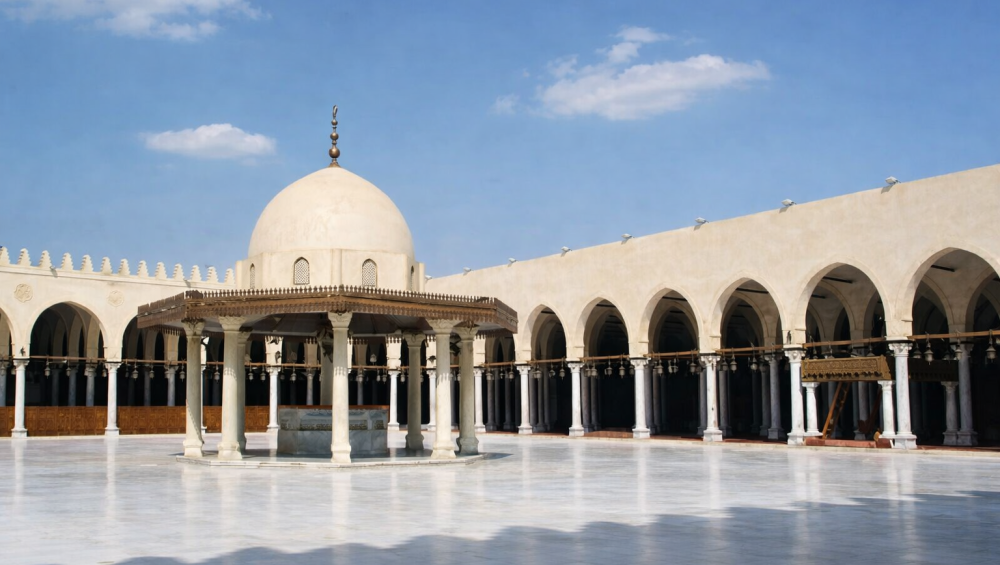
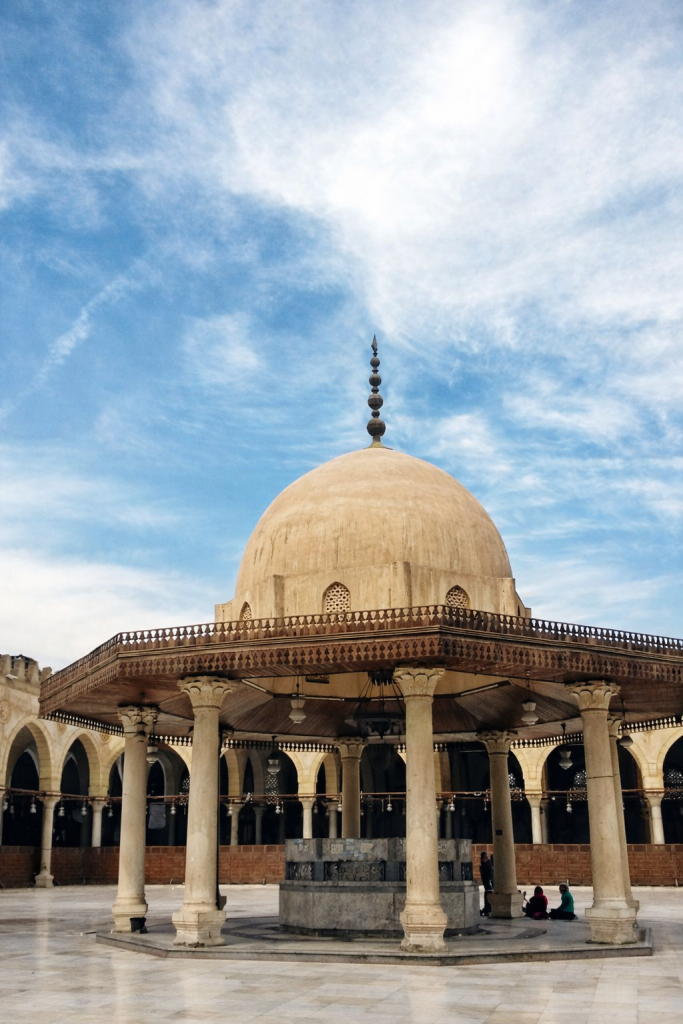
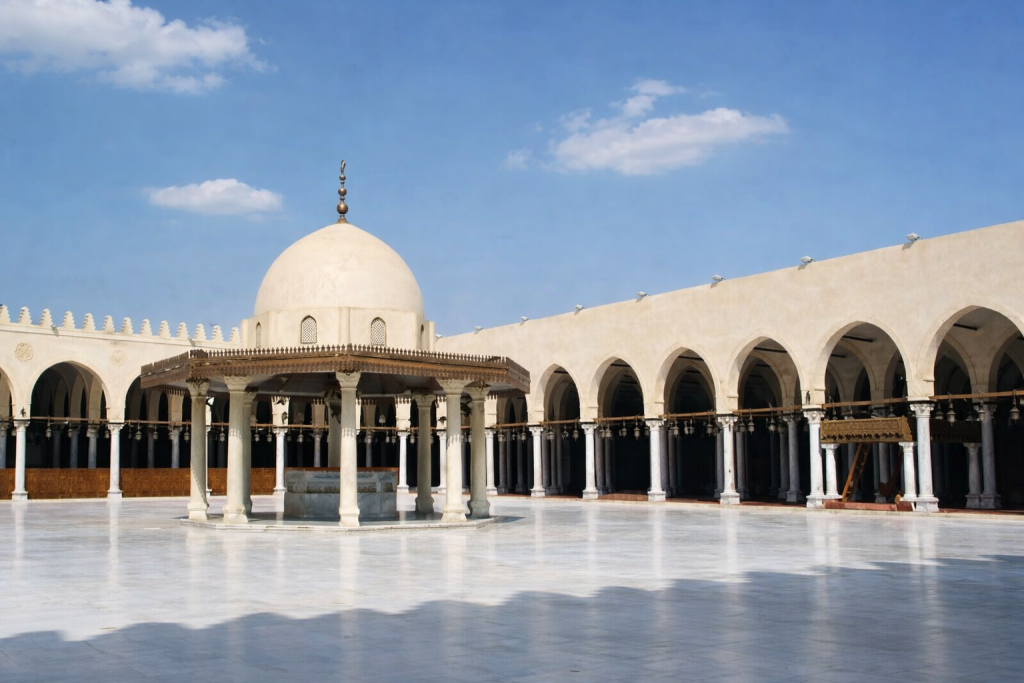
The Open Courtyard (Sahn)

One of the most striking features is the wide open courtyard. This design allows natural light to fill the mosque, creating a peaceful spiritual atmosphere.

The Hypostyle Prayer Hall

The mosque features a hypostyle hall supported by rows of columns. Many of these columns were reused from older buildings, making each one slightly different from the others.

The Mihrab and Minbar

The mihrab indicates the direction of Mecca. Over time, it evolved from a simple niche into a more decorative architectural element. The wooden minbar (pulpit) reflects Islamic craftsmanship traditions.


Religious and Educational Importance

A Center of Islamic Learning

For centuries, the Amr Ibn Al-As Mosque served as a center of education. Scholars taught Quran, Hadith, and Islamic jurisprudence here long before formal institutions were established.

Community and Social Role

Beyond prayers, the mosque functioned as a gathering space for discussions, announcements, and even judicial matters.


The Spiritual Atmosphere Inside the Mosque

Visitors often describe a unique sense of calm inside the Amr Ibn Al-As Mosque. Despite being located in a busy urban area, stepping inside feels like entering a different world.

The red carpets, symmetrical columns, and filtered daylight create a serene environment ideal for reflection and prayer.


Location in Old Cairo and Its Surroundings

The Amr Ibn Al-As Mosque is located in Old Cairo (Masr Al-Qadima), an area rich in religious diversity.

Nearby Attractions

  • The Hanging Church
  • The Coptic Museum
  • Ben Ezra Synagogue

This makes the mosque part of a larger interfaith historical landscape, where Islamic, Christian, and Jewish heritage coexist.


The Mosque Through Political Changes

Throughout Islamic history, Egypt saw different dynasties and rulers. Despite wars, fires, and political shifts, the Amr Ibn Al-As Mosque remained a constant spiritual landmark.

It was rebuilt several times due to damage, but each reconstruction preserved its identity as the first mosque in Africa.


Modern Restoration and Preservation Efforts

In recent decades, the Egyptian government carried out major restoration projects to protect the mosque’s structure and architectural integrity.

These restorations aimed to:

  • Strengthen foundations
  • Preserve original columns
  • Improve lighting and ventilation
  • Maintain historical authenticity

Visiting Amr Ibn Al-As Mosque Today

Best Time to Visit

Morning hours offer a peaceful atmosphere and beautiful natural lighting for photography.

Dress Code

Modest clothing is required. Women should cover their hair, and both men and women should dress respectfully.

Photography Tips

The symmetrical rows of columns and arches create stunning visual perspectives. Wide-angle shots capture the architectural depth beautifully.


Why Amr Ibn Al-As Mosque Is a Must-Visit Landmark

The Amr Ibn Al-As Mosque is not just a religious site; it is a living monument that tells the story of Islamic Egypt from its very beginning.

It represents:

  • The birth of Islamic architecture in Africa
  • The foundation of Fustat
  • A center of scholarship and spirituality
  • A symbol of resilience through centuries

For tourists exploring Cairo, visiting the Amr Ibn Al-As Mosque offers a deeper understanding of Egypt beyond the pyramids and pharaonic temples.


The Enduring Legacy of Amr Ibn Al-As Mosque

More than 1,300 years after its foundation, the Amr Ibn Al-As Mosque continues to stand proudly in Old Cairo. It remains a place of prayer, learning, and historical reflection.

Its walls witnessed the transformation of Egypt from a newly conquered land into one of the most important centers of Islamic civilization.

From humble beginnings to architectural magnificence, the mosque’s journey mirrors the journey of Islamic Egypt itself.

Whether you are a traveler, a history enthusiast, or someone seeking spiritual tranquility, the Amr Ibn Al-As Mosque offers an unforgettable experience that connects the past with the present.


7 Hidden Ancient Churches in Old Cairo You Can’t Afford to Miss


Introduction

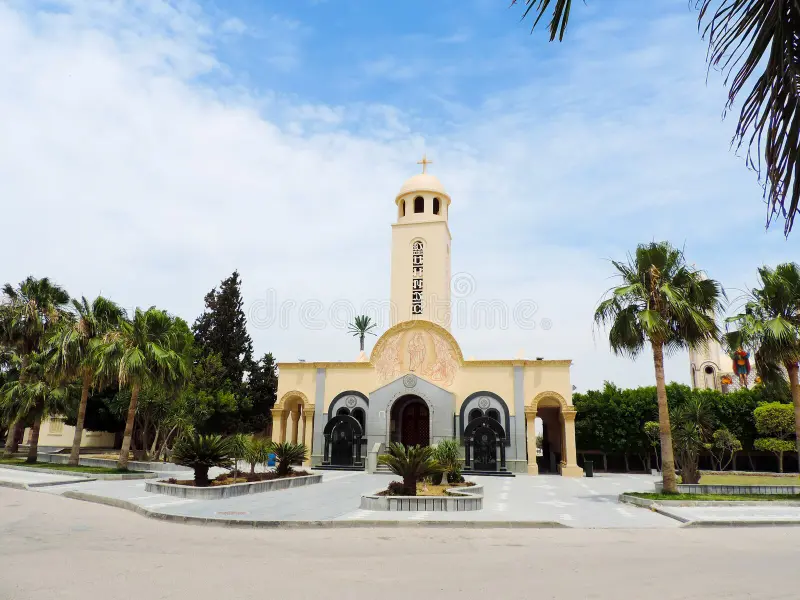
Church Old Cairo — often called Coptic Cairo — is one of the most iconic historical districts in Egypt. It’s a place where ancient Christian faith and culture meet history and art. Here you can visit some of the country’s oldest , many of which date back over a thousand years and have deep spiritual significance, including sites linked to the Holy Family’s journey through Egypt. Walking through this area feels like stepping back in time. (Wikipedia)


1. The Hanging Church ( the Virgin Mary)

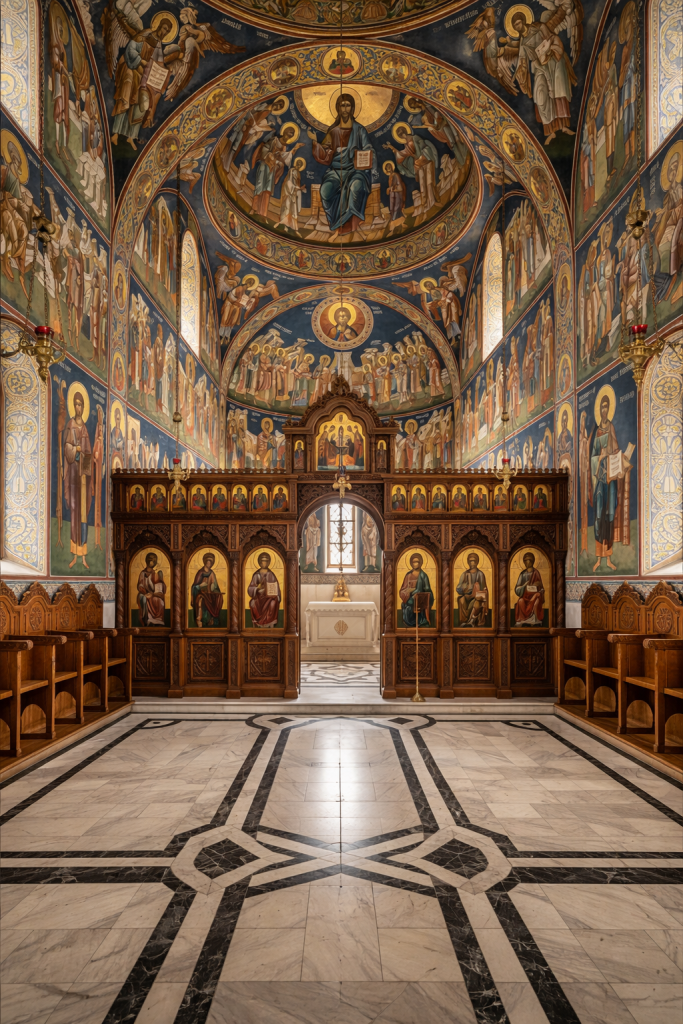
One of the most famous and oldest Coptic churches in Egypt, the Hangingis built above the gates of the old Roman Babylon Fortress in Old Cairo. Its name comes from the way its nave “hangs” over the passageway below. It has been a central place of worship and religious authority for centuries, with beautiful iconography and architecture. (Wikipedia)

Church

2. Saints Sergius and Bacchus (Abu Serga)

The Abu Serga Church is one of the oldest Christian churches in Cairo, traditionally built on the spot where the Holy Family (Mary, Joseph and Jesus) rested during their flight into Egypt. Beneath the church is a crypt believed to be the resting place they used in ancient times. (Wikipedia)


3. the Holy Virgin (Babylon El‑Darag)

This historic in Babylon El‑Darag dates back many centuries and is known not only for its age but also for traditional associations with the Holy Family’s stay in Egypt. Several Coptic patriarchs were buried here, and it remains a spiritually important site. (Wikipedia)

the Holy Virgin

4. Saint Barbara

Part of the Old Cairo churches cluster, Saint Barbara is another iconic historic site with rich architectural and religious heritage. It’s known for its role in Coptic Christian tradition and its beautiful medieval design. (دوت مصر)


5. Church of Abu Seifin (Saint Mercurius)

Also known as the Saint Mercurius, this church is part of the Old Cairo area’s ancient Christian monuments. It’s named for Saint Mercurius and showcases traditional Coptic art and architecture. (دوت مصر)


6. Greek Orthodox Church of Saint George

Located within the same historic quarter, this round church dedicated to Saint George reflects the diversity of Christian heritage in Old Cairo. Its round shape and long history make it a unique religious landmark in the area. (home)


7. Church of Saint Menas

One of the earliest Christian around Old Cairo, the Church of Saint Menas (near Fum al‑Khalig) dates back to around the 6th century and is an important piece of early Coptic architectural history. (Wikipedia)


Conclusion

Visiting the seven ancient of Old Cairo is more than a tour — it’s a journey through centuries of Egypt’s Christian heritage, faith, and historical evolution. Each site carries its unique story, architectural style, and cultural meaning. Together, they offer a rich tapestry of spirituality and history that has drawn pilgrims and travelers from around the world for generations. (دوت مصر)

Old Cairo, also known as Coptic Cairo, is a historic district that holds the heart of Egypt’s Christian legacy.

Unlike the modern of Egypt, these ancient sites have witnessed centuries of history, including Roman, Byzantine, and Islamic eras.

Visitors from around the world are drawn to this area, not only for its religious significance but also for its unique architecture, frescoes, and ancient relics.

Exploring these churches provides a window into Egypt’s spiritual and cultural development over nearly two millennia.

Visiting the seven ancient churches of Old Cairo is an unforgettable experience that combines history, architecture, and spirituality.

These are more than just religious sites — they are living museums of Egypt’s Christian heritage, telling stories of faith, resilience, and culture.

For tourists, pilgrims, and history enthusiasts alike, a visit provides not only spiritual enrichment but also a deeper understanding of Egypt as a historical crossroads of religion and civilization.


12 Fascinating Secrets of the Temple of Horus in Edfu You Absolutely Must Discover

Temple of Horus in Edfu – Egypt’s Best-Preserved Ancient Wonder

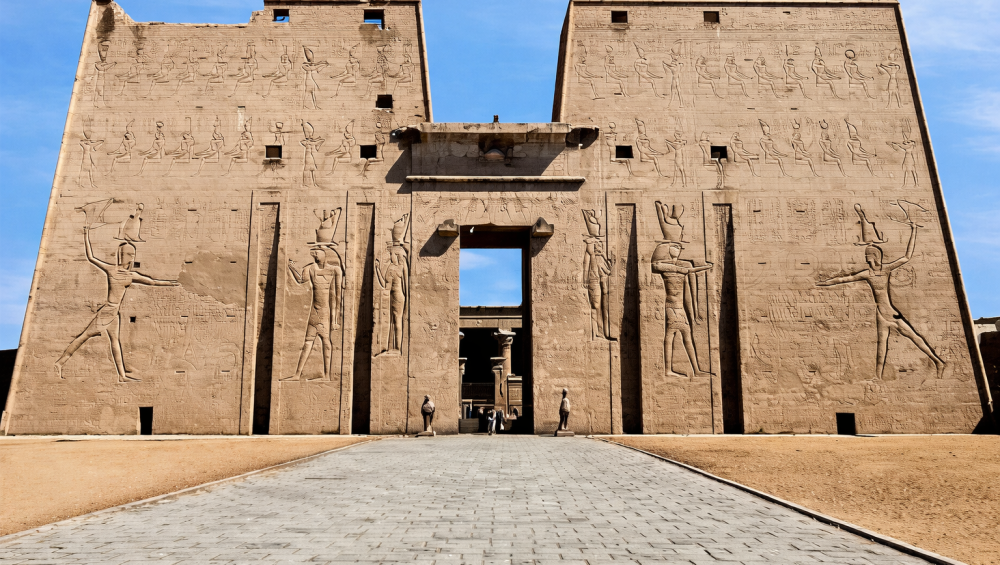
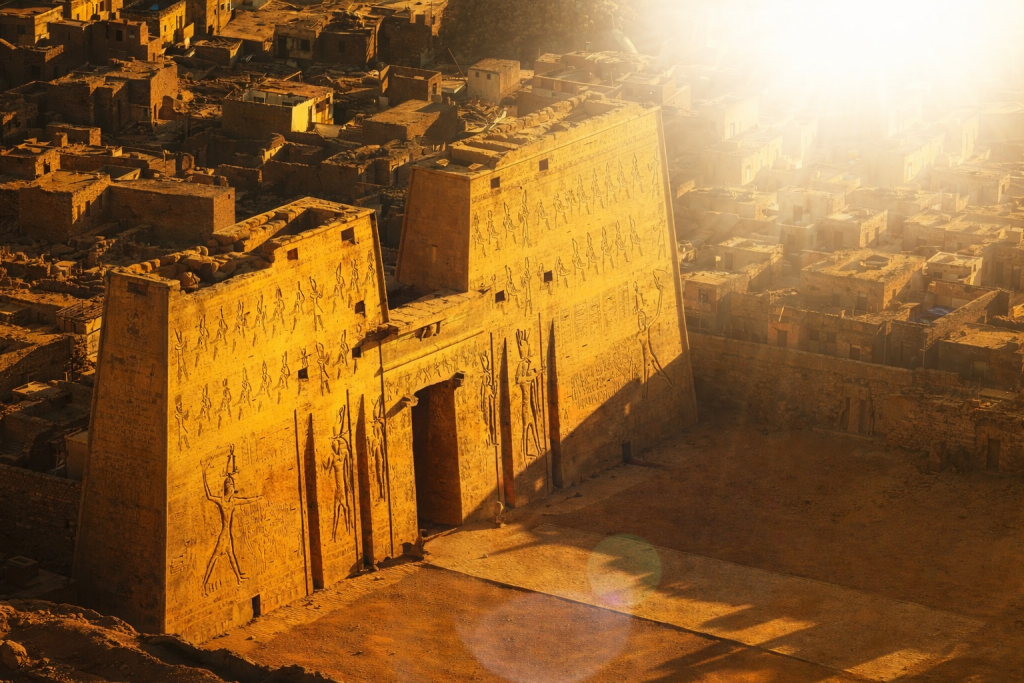
The Temple of Horus in Edfu stands as one of the most impressive and remarkably preserved monuments in all of Egypt. Located between Luxor and Aswan, this majestic temple offers visitors a rare opportunity to step directly into the religious and political world of ancient Egypt. Unlike many temples that were heavily damaged over centuries, the Temple of Horus in Edfu survived beneath layers of sand, which helped protect its walls, inscriptions, and architectural details.

Built during the Ptolemaic period, the temple was dedicated to Horus, the falcon-headed god of protection, kingship, and divine power. Today, it remains one of the most visited archaeological sites in Upper Egypt.


1. The Strategic Location

The Temple of Horus in Edfu is located on the west bank of the Nile in the city of Edfu. Its strategic placement between Luxor and Aswan made it an important religious center in ancient times.

Edfu was considered a sacred city where Horus defeated Seth, the god of chaos. This mythological importance gave the Temple of Horus in Edfu a central role in Egyptian religious traditions.

Temple of Horus in Edfu

2. When Was the Temple of Horus in Edfu Built?

Construction began in 237 BC during the reign of Ptolemy III Euergetes I. The temple was completed in 57 BC under Ptolemy XII.

It took approximately 180 years to complete. Despite being built during the Greek Ptolemaic era, the architecture strictly followed traditional ancient Egyptian design principles.


3. The Massive Pylons – A Grand Entrance

The Symbolism Behind the Pylons

The towering pylons of the Temple of Horus in Edfu rise about 36 meters high. These massive entrance towers are decorated with scenes of the king defeating enemies before Horus.

The imagery symbolizes divine protection and royal authority. Visitors walking through these pylons experience the same powerful visual message that ancient Egyptians once did.


4. The Courtyard of Offerings

Beyond the entrance lies a large open courtyard surrounded by columns. This area was used for public religious ceremonies.

The Temple of Horus in Edfu was not only a place for priests but also for citizens who gathered here during major festivals.


5. The Hypostyle Hall – A Forest of Columns

Astronomical Ceilings and Sacred Inscriptions

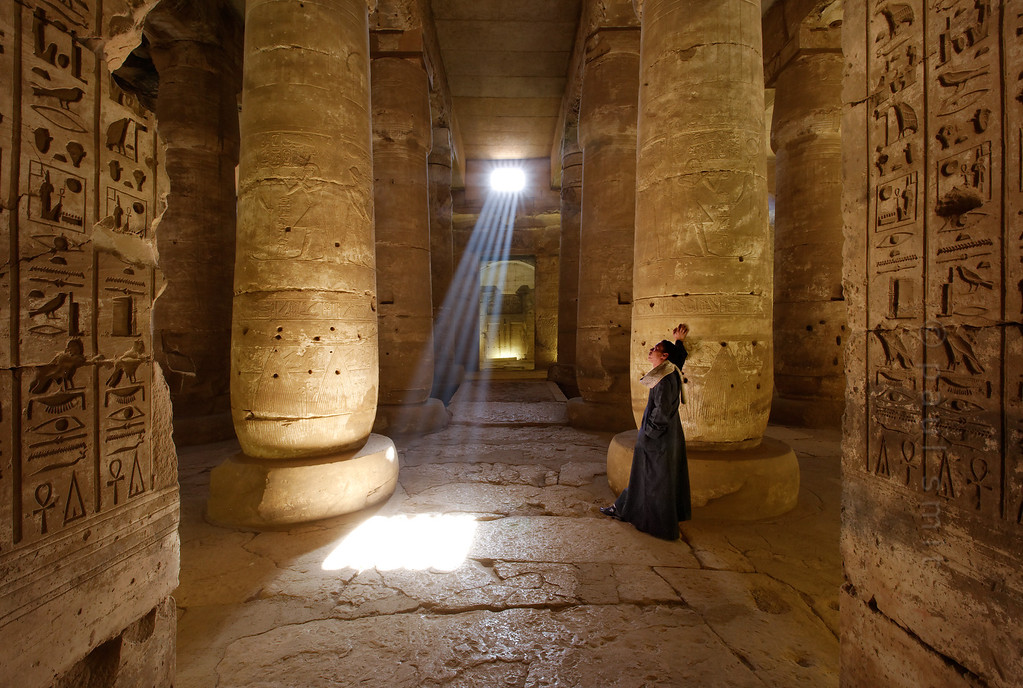
The hypostyle hall contains towering columns decorated with floral capitals. The ceiling once displayed astronomical scenes representing the heavens.

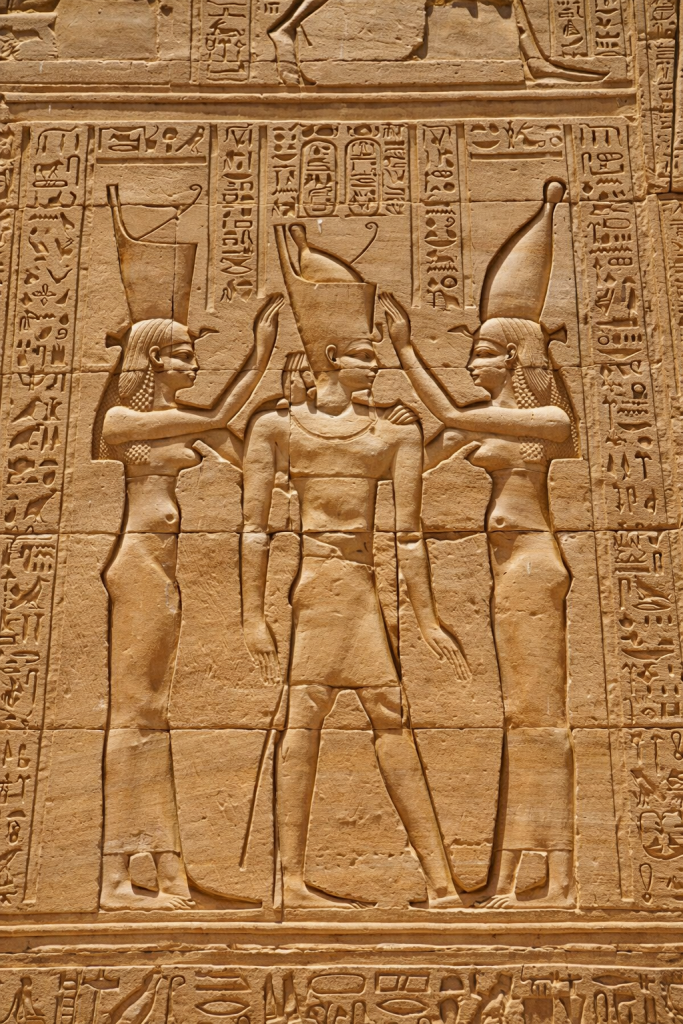
The walls are filled with detailed inscriptions that describe rituals, prayers, and sacred ceremonies performed inside the Temple of Horus in Edfu.


6. The Sanctuary – The Heart of the Temple

At the center lies the sanctuary, the most sacred part of the Temple of Horus in Edfu.

Inside stands a granite shrine that once held the golden statue of Horus. Only high priests and the pharaoh were allowed to enter this chamber.


7. The Myth of Horus and Seth

One of the most fascinating aspects of the Temple of Horus in Edfu is the detailed inscriptions describing the epic battle between Horus and Seth.

These texts are among the most complete mythological records found in any Egyptian temple. They explain how Horus avenged his father Osiris and restored order to Egypt.


8. Annual Festivals and Religious Ceremonies

The Temple of Horus in Edfu played a key role in the “Beautiful Meeting” festival.

During this annual celebration, the statue of Hathor traveled from Dendera to meet Horus in Edfu. This symbolic reunion represented divine harmony and fertility.


9. Architectural Perfection and Symmetry

Traditional Egyptian Design

The Temple of Horus in Edfu follows classic Egyptian temple layout:

  • Pylon entrance
  • Open courtyard
  • Hypostyle hall
  • Sanctuary

This strict alignment reflects cosmic order and religious precision.


10. Hidden Chambers and Passageways

The temple contains numerous side chambers used for storing ritual objects, incense, and sacred texts.

Some rooms were dedicated to specific ceremonies and purification rituals carried out by priests.


11. Why the Temple of Horus in Edfu Is So Well Preserved

For centuries, the Temple of Horus in Edfu was buried under sand and Nile silt. Local houses were even built on top of it.

When French Egyptologist Auguste Mariette began excavations in the 19th century, the temple was revealed almost intact.

This natural protection explains why it remains Egypt’s best-preserved ancient temple.


12. Visiting the Temple of Horus in Edfu Today

Today, the Temple of Horus in Edfu is a highlight of Nile cruises between Luxor and Aswan.

Visitors can:

  • Walk through the massive pylons
  • Explore detailed carvings
  • Photograph falcon statues of Horus
  • Discover ancient myths carved in stone

It provides one of the most immersive ancient Egyptian experiences available.


The Cultural Importance of the Temple of Horus in Edfu

The Temple of Horus in Edfu is more than just stone walls and carvings. It represents political propaganda, religious devotion, architectural genius, and mythological storytelling.

Its inscriptions serve as historical documents preserving rituals, festivals, and theological beliefs that shaped ancient Egyptian civilization.


Architectural Highlights of the Temple of Horus in Edfu

  • 36-meter-high pylons
  • Massive granite naos
  • Falcon statues at the entrance
  • Intricate hieroglyphic inscriptions
  • Nearly complete temple structure

Each section reflects careful planning and symbolic meaning.


Why the Temple of Horus in Edfu Is a Must-Visit in Upper Egypt

If you are planning a trip to Upper Egypt, the Temple of Horus in Edfu should be at the top of your list.

Unlike many ruins, this temple allows visitors to truly understand how an ancient Egyptian temple functioned. Its preservation, scale, and historical importance make it one of the most extraordinary monuments in Egypt.


Conclusion: The Timeless Power of the Temple of Horus in Edfu

stands as a breathtaking reminder of Egypt’s spiritual and architectural brilliance. From its colossal pylons to its sacred sanctuary, every corner tells a story of power, faith, and mythology.

More than 2,000 years after its construction, the Temple of Horus in Edfu continues to captivate historians, travelers, and culture lovers from around the world.

It is not just a monument — it is a living legacy carved in stone.

temple

10 Astonishing Secrets of Dendera Temple: Explore Ancient Egypt’s Mysteries


Dendera Temple: An Ancient Egyptian Marvel That Captivates All

Nestled in the heart of Egypt, near the timeless Nile River, Dendera Temple stands as one of the most well-preserved temples in the world. This is not just an archaeological site—it is a window into the beliefs, astronomy, art, and architecture of Ancient Egypt.


1. Introduction to Dendera Temple

Also known as the Temple of Hathor, Dendera Temple is one of the most remarkable examples of Ptolemaic and Roman-era Egyptian architecture. Built to honor the goddess Hathor, this temple has preserved stunning wall carvings, astronomical ceilings, and sacred rituals that date back over 2,000 years.

The temple is located in the town of Dendera, about 60 km north of Qena in Upper Egypt, and it was a major religious center for pilgrims across the Nile Valley.

Dendera

2. Location and Historical Significance

Dendera Temple sits on the western bank of the Nile, surrounded by fertile lands. Its strategic location made it a spiritual hub for worshipers. The temple was designed to align with cosmic and astronomical patterns, reflecting Ancient Egyptians’ belief in the connection between gods and the sky.


3. Hathor: The Goddess of Joy and Music

3.1 The Divine Role of Hathor

Hathor, the cow-headed goddess, symbolizes love, music, dance, fertility, and motherhood. She was revered as a protector of kings and a patron of joy and celebration. Representations of Hathor show her with cow ears or horns, often carrying a solar disk between the horns.

3.2 Hathor in Dendera Temple

Dendera Temple was dedicated to Hathor, and many of the temple’s walls depict her interacting with pharaohs and performing miracles, including giving life to the deceased in the afterlife.


4. Key Sections of Dendera Temple

The temple is expansive, featuring several major areas:

4.1 The Grand Entrance

A monumental pylon decorated with vibrant hieroglyphics and reliefs, marking the transition from the mundane world into the divine realm.

4.2 The Hypostyle Hall

A massive hall filled with 24 towering columns, each carved with intricate scenes of gods, rituals, and sacred ceremonies.

4.3 The Sanctuary (Holy of Holies)

This was the most sacred area where the statue of Hathor was kept. Only priests were allowed inside to perform daily rituals and ceremonies.


5. Astronomical Ceilings and Egyptian Cosmology

One of Dendera Temple’s most unique features is its celestial ceiling, which depicts:

  • Planets such as Mercury, Venus, Mars
  • Zodiac signs and constellations
  • Cosmic diagrams tied to Egyptian religious festivals

These artworks demonstrate the advanced astronomical knowledge of the Ancient Egyptians and their integration of astronomy with religious life.


6. Famous Reliefs and Symbols

The temple walls are covered with symbolic reliefs and inscriptions, illustrating myths, celebrations, and daily life in Ancient Egypt.

6.1 Musical Celebrations

Many carvings depict musicians, dancers, and instruments used in religious ceremonies, highlighting the temple’s role as a center for joy and cultural celebration.

6.2 Creation Myths

Scenes representing the creation of the world, divine battles, and cosmic order are etched in vivid detail, offering insight into the Egyptian worldview.


7. Architecture and Design of Dendera Temple

Dendera Temple is a masterpiece of Ptolemaic architecture, featuring:

  • Massive stone columns adorned with floral capitals
  • Brightly painted walls with intricate hieroglyphics
  • Careful alignment with the rising sun during solstices

Every detail, from the angles of the columns to the positioning of statues, holds symbolic meaning.

Dendera Temple

8. Archaeological Discoveries

8.1 The Dendera Zodiac

The famous Dendera Zodiac, a circular bas-relief representing constellations, was discovered on the ceiling of one of the temple’s chambers. It is a key artifact in understanding Egyptian astronomy.

8.2 Stone Statues and Relics

Archaeologists uncovered several statues and small stone carvings showcasing the exceptional skill of Egyptian sculptors and their dedication to religious art.


9. Nearby Temples and Tourism Importance

Dendera is part of a rich network of Egyptian temples:

  • Abydos Temple
  • Luxor Temples
  • Saqqara monuments

Visiting these sites offers tourists a deep dive into the culture, religion, and history of Ancient Egypt.


10. Visiting Dendera Temple: Practical Guide

10.1 Best Time to Visit

The ideal months are:

  • January to March
  • September to November

These months offer moderate temperatures and pleasant sightseeing conditions.

10.2 Tips for Tourists

  • Wear comfortable shoes
  • Carry water and sun protection
  • Hire a professional guide for in-depth historical insights

11. 10 Astonishing Facts About Dendera Temple

  1. Dendera Temple is one of the best-preserved temples in Egypt.
  2. Its ceilings contain rare astronomical depictions.
  3. Dedicated to Hathor, goddess of love and music.
  4. Constructed over multiple Ptolemaic and Roman periods.
  5. Hypostyle hall features 24 majestic columns.
  6. Served as a center for annual religious festivals.
  7. Influenced later temples with its astronomical designs.
  8. Contains secret chambers yet to be fully explored.
  9. Symbols and reliefs are studied in universities worldwide.
  10. Wall colors are remarkably intact even after 2,000 years.

12. Why Dendera Temple Remains a Symbol of Ancient Egyptian Civilization

The significance of Dendera Temple goes beyond its age. It represents a cultural, artistic, and astronomical legacy, showcasing the genius of a civilization that connected the heavens with earthly life.


Conclusion: A Timeless Message from the Past

Dendera Temple is not just stone and paint—it is a bridge between humanity and the divine, a message across millennia about the brilliance and spirituality of Ancient Egypt. Each carving, column, and ceiling tells a story that continues to inspire awe today.


7 Incredible Secrets of the Nubian Village in Aswan You’ll Absolutely Love


Introduction to the Nubian Village in Aswan

The is one of the most vibrant and culturally rich destinations in southern Egypt. Located along the banks of the Nile River near Aswan, this colorful village is a living museum of Nubian heritage, traditions, and hospitality.

Unlike ancient temples and archaeological sites, the Nubian Village in Aswan offers something different: a warm human experience. Here, visitors are welcomed into beautifully painted homes, offered traditional tea, and introduced to customs that date back thousands of years.

is not just a tourist attraction—it is a symbol of resilience, identity, and cultural pride.


Where Is the Nubian Village in Aswan Located?

is situated on the west bank of the Nile, near Elephantine Island and close to the area surrounding the Aswan High Dam.

To reach visitors typically take a traditional motorboat or felucca from the Corniche of Aswan. The boat ride itself is a magical experience, offering stunning views of golden sand dunes, palm trees, and small Nile islands.

Nubian Village in Aswan

The Fascinating History Behind the Nubian Village in Aswan

Who Are the Nubians?

The Nubians are one of the oldest civilizations in Africa. Historically, Nubia extended from southern Egypt into northern Sudan. The region was once home to powerful kingdoms such as the Kingdom of Kush.

Nubians have maintained their own language, music, architecture, and customs despite centuries of political changes.

The Impact of the Aswan High Dam

When the Aswan High Dam was built in the 1960s under President Gamal Abdel Nasser, many Nubian communities were displaced due to the creation of Lake Nasser.

As a result, thousands of Nubians relocated and rebuilt their homes in new areas, including the present-day Despite relocation, they preserved their traditions, language, and architectural style.

The Stunning Colors of the Nubian Village in Aswan

One of the most striking features of is its brightly painted houses. The walls are decorated with:

  • Vibrant blues, yellows, and pinks
  • Hand-painted symbols
  • Traditional Nubian patterns
  • Drawings of camels, birds, and the Nile

The architecture reflects both African and Islamic influences, with domed ceilings that help cool homes during the hot summer months.

Walking through the narrow streets of the Nubian Village in Aswan feels like stepping into a living art gallery.


Authentic Nubian Culture and Traditions

is famous for its strong community bonds and welcoming spirit.

Nubian Language

Many locals still speak Nubian languages alongside Arabic, preserving their cultural identity.

Traditional Music and Dance

Music is central to life . Traditional instruments include drums and tambourines, and celebrations often involve rhythmic dancing and singing.

Visitors may be invited to participate in musical evenings, especially during festivals or special occasions.


Incredible Nubian Cuisine You Must Try

Food is an essential part of the experience

Popular dishes include:

  • Fatta with meat
  • Grilled chicken with spices
  • Fresh Nile fish
  • Traditional Nubian bread
  • Hibiscus tea (Karkadeh)

Meals are usually homemade and served in cozy guesthouses overlooking the Nile.


Unique Handicrafts and Souvenirs

Shopping in the Nubian Village in Aswan is a cultural experience.

You can find:

  • Handmade jewelry
  • Beaded necklaces
  • Colorful scarves
  • Handwoven baskets
  • Painted pottery

Many items are crafted locally, helping support the community directly.


The Famous Crocodile Houses

One of the most unusual attractions is the tradition of keeping small crocodiles. Some homes display preserved crocodiles as symbols of strength and protection.

This tradition dates back to ancient Egyptian beliefs associated with the crocodile god Sobek.


Why the Nubian Village in Aswan Is Perfect for Cultural Tourism

Unlike crowded historical sites, the Nubian Village in Aswan offers:

  • Direct interaction with locals
  • Authentic home visits
  • Cultural immersion
  • Peaceful Nile scenery

It is ideal for travelers looking for meaningful, responsible tourism experiences.


Best Time to Visit the Nubian Village in Aswan

The best time to visit the Nubian Village in Aswan is between October and April when temperatures are moderate.

Summer months can be extremely hot, but early morning or sunset visits are still enjoyable.


How to Reach the Nubian Village in Aswan

Visitors can reach Aswan by:

  • Train from Cairo
  • Domestic flights
  • Nile cruises

From Aswan city, a boat ride of 20–30 minutes takes you directly to the Nubian Village in Aswan.


Tips for Visiting the Nubian Village in Aswan

  • Respect local traditions
  • Ask before taking photos
  • Bring cash for shopping
  • Wear comfortable clothing
  • Support local businesses

The Role of the Nubian Village in Preserving Identity

The Nubian Village in Aswan represents cultural survival. Despite displacement and modernization, Nubians continue to celebrate their heritage proudly.

This village stands as a reminder that culture is not only preserved in temples and museums—but in people, homes, music, and daily life.


Why the Nubian Village in Aswan Should Be on Your Egypt Itinerary

If you are planning a trip to southern Egypt, combining visits to temples like Philae Temple with the Nubian Village in Aswan creates a perfect balance between ancient history and living culture.

The Nubian Village in Aswan offers something rare: a genuine human connection.


Conclusion

The Nubian Village in Aswan is more than colorful houses and beautiful Nile views. It is a living story of resilience, heritage, and hospitality. From its fascinating history and vibrant architecture to its music, cuisine, and traditions, the Nubian Village in Aswan delivers an unforgettable cultural experience.

For travelers seeking authenticity, warmth, and cultural depth, the Nubian Village in Aswan is truly one of Egypt’s hidden treasures.


9 Fascinating Secrets of Elephantine Island: The Ultimate Historical Treasure of Aswan


Elephantine Island – The Timeless Jewel of Aswan

Located in the heart of the Nile River in Aswan, Elephantine Island is one of Egypt’s most captivating archaeological and cultural treasures. This ancient island holds thousands of years of history, blending Pharaonic, Nubian, and even Jewish heritage into one extraordinary destination.

Unlike the grand temples of Abu Simbel or Philae, Elephantine Island offers something more intimate and authentic. It allows visitors to walk through layers of civilization, from the Old Kingdom to the Greco-Roman period, all while enjoying breathtaking Nile views.

For travelers exploring Aswan, Elephantine Island is not just a stop — it is a journey into Egypt’s southern frontier history.

Elephantine Island

Where Is Elephantine Island Located?

sits in the Nile River directly opposite the city of Aswan in southern Egypt. The island stretches approximately 1.2 kilometers in length and about 400 meters in width.

It was historically positioned at Egypt’s southern border near Nubia, making a strategic military and trading center in ancient times.

Why Is It Called Elephantine Island?

There are several fascinating theories behind the name:

  • The island’s shape resembles an elephant tusk.
  • The area was once a major center for ivory trade.
  • Granite boulders near the riverbanks resemble bathing elephants.

The ancient Egyptian name of the island was “Abu” or “Yebu,” meaning “Elephant.”


The Powerful Historical Importance of Elephantine Island

was more than just a settlement — it was a fortified frontier city guarding Egypt’s southern border.

During the Old Kingdom, the island served as:

  • A military stronghold
  • A customs and trading post
  • A religious center dedicated to the ram-headed god Khnum

Because of its location near the First Cataract of the Nile, controlled river traffic between Egypt and Nubia.


The Temple of Khnum – The Sacred Heart of Elephantine Island

One of the most significant structures was the Temple of Khnum.

Khnum was believed to be the god of the Nile’s source and the creator of humans, who formed people on a potter’s wheel.

Although much of the temple is now in ruins, archaeological remains show that:

  • It dates back to the Old Kingdom.
  • It was rebuilt during the Middle and New Kingdoms.
  • It remained important during the Ptolemaic period.

Why Was Khnum So Important?

Because was associated with the Nile’s inundation, Khnum was considered the controller of the annual flood — the lifeline of ancient Egypt.


The Nilometer of Elephantine Island

One of the island’s most fascinating structures is the Nilometer.

A Nilometer was used to measure the water level of the Nile River. This measurement determined:

  • Agricultural taxation
  • Crop predictions
  • Economic planning

The Elephantine Nilometer consists of stone steps descending into the river with measurement markings along the walls.

This structure proves how scientifically advanced ancient Egyptians were in managing natural resources.


The Temple of Satet – The Goddess of the Flood

Another major religious structure is the Temple of Satet.

Satet was the goddess of the Nile’s flood and protector of Egypt’s southern frontier.

Archaeological excavations reveal that:

  • The earliest temple dates back to the Early Dynastic Period.
  • The temple was rebuilt multiple times.
  • It remained significant through the New Kingdom.

Satet was closely associated with Khnum and Anuket, forming the Elephantine Triad.


The Elephantine Triad – Khnum, Satet, and Anuket

Religious life revolved around three deities:

  • Khnum (creator god)
  • Satet (goddess of the flood)
  • Anuket (goddess of the Nile)

Together, they represented the life-giving power of the Nile River.

Their worship made one of Upper Egypt’s most spiritually significant locations.


The Jewish Temple of Elephantine Island

One of the most surprising discoveries on Elephantine Island was evidence of a Jewish community during the 5th century BCE.

Archaeologists discovered papyri written in Aramaic that documented:

  • A Jewish military colony
  • A temple dedicated to Yahweh
  • Daily life and legal contracts

These Elephantine Papyri provide rare insight into multicultural life in ancient Egypt during the Persian period.


Archaeological Discoveries on Elephantine Island

Excavations on Elephantine Island began in the 19th century and continue today.

Major discoveries include:

  • Old Kingdom administrative buildings
  • Middle Kingdom fortifications
  • Ptolemaic temples
  • Residential houses

German archaeological missions have played a key role in uncovering much of the island’s layered history.


Nubian Culture on Elephantine Island

Today, is home to vibrant Nubian villages.

Visitors can experience:

  • Traditional Nubian houses painted in bright colors
  • Handmade crafts
  • Authentic Nubian cuisine
  • Warm hospitality

This living culture adds another dimension to Elephantine Island’s appeal.


Why Elephantine Island Is a Must-Visit in Aswan

offers:

  • A quieter alternative to crowded temples
  • A deep historical experience
  • Stunning Nile views
  • Cultural immersion

Unlike major monuments, Elephantine Island allows visitors to explore freely and connect more personally with ancient history.


How to Visit

Visitors can reach Elephantine Island by:

  • Local ferry boat
  • Private motorboat
  • Felucca ride

Best Time to Visit

The best time to explore Elephantine Island is between October and April when temperatures are cooler.

Morning visits are recommended to avoid midday heat.


Travel Tips for Exploring Elephantine Island

  • Wear comfortable walking shoes.
  • Bring water and sun protection.
  • Combine your visit with Aswan Museum.
  • Allow 2–3 hours for full exploration.

Elephantine Island vs Philae Temple – Which Is Better?

While Philae Temple is grand and visually dramatic, offers:

  • Deeper archaeological layers
  • Less crowded spaces
  • Authentic Nubian life
  • Unique Jewish historical remains

Each site has its charm, but delivers a powerful historical depth.


The Enduring Legacy of Elephantine Island

For over 4,000 years, Elephantine Island has witnessed:

  • Pharaohs
  • Persian rulers
  • Greek influence
  • Roman administration
  • Nubian traditions

Few places in Egypt carry such a continuous and diverse historical record.


The Extraordinary Power of Elephantine Island

is not just an archaeological site — it is a living archive of Egypt’s southern frontier.

From the Temple of Khnum to the Nilometer, from Nubian villages to ancient papyri, offers an unforgettable journey through time.

For travelers seeking authenticity, depth, and breathtaking Nile scenery remains one of Aswan’s most powerful hidden treasures.


7 Fascinating Secrets of the Tombs of the Nobles in Luxor You’ll Absolutely Love


Tombs of the Nobles in Luxor: A Complete Travel & Historical Guide

The Tombs of the Nobles in Luxor are among the most fascinating yet underrated archaeological treasures in Egypt. While most travelers rush to the Valley of the Kings, the Tombs of the Nobles offer something even more intimate: a vivid glimpse into the daily life, careers, and personal ambitions of ancient Egyptian officials.

Located on the West Bank of Luxor near the Valley of the Queens and Deir el-Medina, the Tombs of the Nobles in Luxor contain more than 400 tombs carved into the cliffs of Sheikh Abd el-Qurna, El-Khokha, and surrounding hills.

Unlike royal tombs that focus mainly on the afterlife journey, the Tombs of the Nobles in Luxor beautifully illustrate scenes of agriculture, banquets, craftsmanship, religious rituals, and family life.


What Are the Tombs of the Nobles in Luxor?

The Tombs of the Nobles in Luxor are burial places of high-ranking officials, governors, priests, scribes, and administrators who served during the New Kingdom period (1550–1070 BC).

These individuals were not kings—but they were powerful figures who worked closely with pharaohs. Their tombs reflect their social status, achievements, and devotion to the gods.

the Tombs of the Nobles in Luxor

Why They Are Different from Royal Tombs

Unlike the Valley of the Kings:

  • Royal tombs focus on sacred texts like the Book of the Dead.
  • Noble tombs show real-life daily activities.
  • Decorations emphasize personal success and family pride.

This is what makes the Tombs of the Nobles in Luxor historically priceless—they show how ancient Egyptian society actually functioned.


Location of the Tombs of the Nobles in Luxor

The Tombs of the Nobles in Luxor are located on the West Bank of the Nile, opposite modern Luxor city.

Main areas include:

  • Sheikh Abd el-Qurna
  • El-Khokha
  • El-Assasif
  • Dra’ Abu el-Naga

They are close to:

  • Valley of the Kings
  • Valley of the Queens
  • Deir el-Medina

This makes them easy to include in any West Bank tour itinerary.


The Historical Importance of the Tombs of the Nobles in Luxor

The Tombs of the Nobles in Luxor provide unmatched historical documentation.

They show:

  • Farming techniques
  • Wine production
  • Fishing and hunting
  • Religious festivals
  • Trade missions abroad
  • Musical performances
  • Banquet celebrations

These painted scenes serve as an ancient “documentary” of Egyptian civilization.

Tombs

Most Famous Tombs You Should Visit

There are hundreds of tombs, but only selected ones are open to visitors.

Tomb of Ramose (TT55)

One of the most impressive tombs in the Tombs of the Nobles in Luxor.

  • Dates to the reign of Amenhotep III and Akhenaten.
  • Shows a transition in art style.
  • Features finely carved reliefs instead of painted scenes.

Tomb of Rekhmire (TT100)

Rekhmire was a powerful vizier.

Scenes include:

  • Tribute from foreign lands
  • Administrative work
  • Workshop production
  • Agricultural scenes

This tomb is like an illustrated encyclopedia of New Kingdom life.

Tomb of Sennefer (TT96)

Known as the “Tomb of the Vines” because of its incredible ceiling decorated with grapevine motifs.

It is one of the most colorful tombs in the Tombs of the Nobles in Luxor.


Art and Decoration Style

The Tombs of the Nobles in Luxor are famous for:

  • Bright mineral pigments
  • Detailed hieroglyphic inscriptions
  • Naturalistic human figures
  • Narrative storytelling scenes

Unlike royal tombs, noble tombs celebrate personal accomplishments.


Religious Beliefs Reflected in the Tombs

Although daily life dominates the walls, religion remains central.

Common themes include:

  • Offerings to Osiris
  • Judgment scenes before the gods
  • Funeral processions
  • The “Opening of the Mouth” ceremony

The Tombs of the Nobles in Luxor show how religion and daily life were inseparable.


Architectural Layout of the Tombs

Most tombs follow a T-shaped design:

  1. Open courtyard
  2. Transverse hall
  3. Long hall
  4. Burial chamber

The Tombs of the Nobles in Luxor were carved directly into limestone cliffs, providing natural protection.


Why the Tombs of the Nobles in Luxor Are Less Crowded

One of the biggest advantages of visiting the Tombs of the Nobles in Luxor is the peaceful atmosphere.

Reasons:

  • Not heavily marketed
  • Smaller tourist groups
  • No massive tour bus traffic
  • Less commercialized

Visitors can explore quietly and appreciate the art closely.


Tickets and Visiting Information

  • Located on Luxor West Bank
  • Tickets sold at West Bank ticket office
  • Usually grouped in sets (3 tombs per ticket)
  • Best time to visit: Early morning (October–April)

Photography policies may vary.


Best Time to Visit the Tombs of the Nobles in Luxor

The ideal season:

  • October to April (cooler weather)
  • Early morning for better light
  • Avoid midday summer heat

The West Bank can become extremely hot between May and September.


Travel Tips for Visitors

  • Wear comfortable shoes
  • Bring water
  • Carry cash for tickets
  • Hire a knowledgeable guide
  • Combine with Deir el-Medina visit

The Tombs of the Nobles in Luxor reward curious travelers who take their time.


Archaeological Discoveries and Ongoing Research

Archaeologists continue to discover new tombs

Recent discoveries include:

  • Undisturbed burial shafts
  • Mummies
  • Funerary equipment
  • Coffins with preserved inscriptions

These findings keep rewriting Egypt’s history.


Cultural and Tourism Significance Today

contribute significantly to cultural tourism.

They offer:

  • Educational value
  • Authentic historical insight
  • Sustainable tourism opportunities
  • Less crowded alternatives to royal sites

For tour operators, promoting the Tombs of the Nobles in Luxor adds depth to any Luxor package.


Why You Should Not Miss the Tombs of the Nobles in Luxor

If you want to truly understand ancient Egyptian society,

They reveal:

  • Real people
  • Real careers
  • Real families
  • Real ambitions

They humanize ancient Egypt in a way royal monuments cannot.


Conclusion

are a hidden masterpiece of ancient Egyptian civilization. While pharaohs built monuments to display eternal power, nobles created tombs that celebrated life, work, and identity.

From vibrant agricultural scenes to international trade depictions, the Tombs of the Nobles in Luxor preserve stories that remain astonishingly fresh today.

For travelers seeking authenticity, depth, and artistic brilliance, the Tombs of the Nobles in Luxor offer an unforgettable journey into the heart of ancient Thebes.


7 Fascinating Secrets of Deir el-Medina: The Powerful Story of Egypt’s Ancient Workers


Introduction

Unlike grand temples and royal tombs built for kings and queens, Deir el-Medina tells the story of ordinary yet highly skilled workers who created some of the greatest monuments in ancient history. Located on the west bank of Luxor, near the Valley of the Kings, this ancient village offers a rare and powerful glimpse into the daily life of the craftsmen who built royal tombs during the New Kingdom.

While most visitors focus on famous sites like the Valley of the Kings, Deir el-Medina quietly preserves something even more valuable: the human story behind the monuments.


What Is Deir el-Medina?

Deir el-Medina was a planned village established during the New Kingdom period (around 1550–1070 BC). It was home to the artisans, builders, painters, and scribes responsible for decorating the royal tombs in the Valley of the Kings and the Valley of the Queens.

The village was officially known in ancient times as “Set Ma’at,” meaning “The Place of Truth.” This name reflects the sacred responsibility these workers had: preparing the eternal homes of pharaohs.


The Strategic Location of Deir el-Medina

Deir el-Medina is located on the west bank of Luxor (ancient Thebes). Its position was carefully chosen:

Close to the Royal Tombs

The village sits between the Valley of the Kings and the Valley of the Queens. This made it easy for workers to travel daily to the tomb construction sites.

Deir el-Medina

Isolated for Security

Because the artisans knew the secrets of royal tomb locations, they lived in a relatively enclosed and controlled community. This reduced the risk of tomb robbery.


Daily Life in Deir el-Medina

One of the most fascinating aspects of Deir el-Medina is how much we know about the daily lives of its inhabitants.

Working Conditions

Workers followed an eight-day work cycle: eight days of work followed by two days of rest. Records found on ostraca (limestone flakes used as writing material) describe attendance lists, absences, and even reasons for missing work — including illness and family issues.

Salaries and Payments

Instead of money, workers were paid in food supplies such as grain, beer, and vegetables. The village functioned like a small, organized community supported by the state.

The First Recorded Strike in History

Deir el-Medina is famous for documenting what many historians consider the first labor strike in recorded history. During the reign of Ramesses III, workers stopped working because they had not received their grain payments. They protested peacefully until the issue was resolved.

This event highlights how structured and organized this community was.


The Tombs of Deir el-Medina

Unlike the royal tombs they decorated, the workers built their own tombs nearby — and many of them are beautifully decorated.

Artistic Excellence

The tombs at Deir el-Medina are smaller than those in the Valley of the Kings but often more detailed and vibrant. The artisans used the same techniques they applied in royal tombs.

Famous Tombs to Explore

Some of the most impressive tombs include:

  • Tomb of Sennedjem
  • Tomb of Inherkhau
  • Tomb of Pashedu

These tombs contain vivid paintings showing scenes from the Book of the Dead, daily life, and religious rituals.


Religion and Beliefs in Deir el-Medina

played a central role in the lives of the villagers.

Personal Piety

Unlike earlier periods where religion focused mainly on the king, the people of Deir el-Medina


Why Is So Important

is not just another archaeological site. It is essential for understanding:

  • Ancient labor organization
  • Social structure in New Kingdom Egypt
  • Education and literacy
  • Women’s roles in ancient society
  • Early labor rights movements

Without Deir el-Medina, we would know very little about the real people behind Egypt’s monumental architecture.


7 Fascinating Secrets of the Mummification Museum You Absolutely Must Discover


Mummification Museum: A Unique Journey Into Ancient Egyptian Secrets

The Mummification Museum in Aswan is one of Egypt’s most intriguing yet underrated attractions. Unlike massive temple complexes, this museum focuses entirely on one of ancient Egypt’s most mysterious and fascinating practices — mummification.

Located along the Nile Corniche in Aswan, the museum offers visitors a rare chance to understand the sacred rituals, scientific precision, and spiritual beliefs behind preserving the dead in ancient Egypt.

If you’re planning a cultural tour in Aswan, the Mummification Museum is a must-visit stop.

Mummification Museum

Why the Mummification Museum Is So Special

Many travelers visit temples and tombs, but few truly understand the complex embalming process that made mummies survive for thousands of years.

The Mummification Museum stands out because:

  • It focuses exclusively on mummification
  • It displays real mummies (human and animal)
  • It explains tools and materials used in the embalming process
  • It connects religion, science, and daily life in ancient Egypt

This makes it an essential educational experience for history lovers.


The History of the Mummification Museum

The museum was opened in 1997 to shed light on ancient Egyptian funerary practices. It was designed to present scientific and religious aspects of mummification in a clear and engaging way.

Unlike large museums filled with thousands of artifacts, this museum contains around 150 carefully selected pieces that tell a focused story.


What You Will See Inside the Mummification Museum

Human and Animal Mummies

One of the highlights of the Mummification Museum is the display of both human and animal mummies. Ancient Egyptians did not only mummify people — they also preserved sacred animals such as:

  • Cats
  • Crocodiles
  • Birds
  • Rams

These animals were often associated with specific gods.


Embalming Tools and Materials

Visitors can see original tools used during the mummification process, including:

  • Bronze hooks used to remove the brain
  • Canopic jars for storing internal organs
  • Natron salt used for drying the body
  • Linen bandages for wrapping

The museum clearly explains each step of the 70-day mummification process.


Religious Beliefs Behind Mummification

Mummification was deeply connected to the ancient Egyptian belief in the afterlife. Egyptians believed that preserving the body allowed the soul (Ka and Ba) to reunite after death.

The museum also displays statues and inscriptions related to Osiris, the god of the afterlife.


Where Is the Mummification Museum Located?

The museum is located in Aswan, along the Nile Corniche, near the city center. Its convenient location makes it easy to combine with visits to:

  • Philae Temple
  • The Nubian Museum
  • Elephantine Island

It’s perfect for a half-day cultural exploration.


Visiting Information and Travel Tips

Here are important details for visitors:

  • Location: Nile Corniche, Aswan
  • Duration of visit: 1–2 hours
  • Best time to visit: Morning or late afternoon
  • Ideal for: Families, students, history lovers

Photography may be restricted inside, so always check rules before taking pictures.


Why You Should Add the Mummification Museum to Your Egypt Itinerary

If you want to truly understand ancient Egyptian civilization, you must understand mummification.

The Mummification Museum gives you:

  • Scientific knowledge
  • Cultural insight
  • Religious understanding
  • A close look at real artifacts

It transforms what many people see as a “mystery” into a fascinating and logical ancient science.


Final Thoughts

The Mummification Museum is one of Aswan’s hidden treasures. Small but powerful, it offers a deep dive into one of the most iconic traditions of ancient Egypt.

Whether you are a first-time visitor or a history enthusiast, this museum provides an unforgettable educational experience that brings ancient Egyptian beliefs to life.


These canopic jars were far more than simple containers. In ancient Egyptian belief, they played a vital role in the journey to the afterli

 museum

\


12 Unbelievable Facts About the Remesseum: The Epic Mortuary Temple of Ramses II


The Ultimate Guide to the Remesseum — Egypt’s Mortuary Temple of Ramses II

Nestled on the west bank of the Nile near modern Luxor, the Remesseum — also known as the Ramesseum — stands as one of ancient Egypt’s most extraordinary monuments. This vast complex was dedicated to Pharaoh Ramses II (Usermaatra-setepenra), one of the most powerful and celebrated kings of Egypt’s New Kingdom era (1279–1213 BCE). (Encyclopedia Britannica)

Despite centuries of weathering and ruin, the Remesseum still offers breathtaking insights into ancient religion, politics, architecture, and daily life in pharaonic Egypt.


What Is the Remesseum?

The Remesseum is a funerary temple built by Pharaoh Ramses II, designed to honor both the king and the god Amun after the king’s death. Located in the ancient city of Thebes (modern-day Luxor), it was part of a broader tradition where pharaohs commissioned spectacular temples on the Nile’s west bank, symbolizing their passage into eternity. (Encyclopedia Britannica)

The Meaning Behind the Name

  • The temple’s original Egyptian name was “House of Millions of Years” — symbolizing eternal life and divine existence. (Madain Project)
  • The modern name “Ramesseum” comes from French Egyptologists of the early 19th century, particularly Jean-François Champollion, who first decoded many of the hieroglyphs on the site. (بوابة الأهرام)

Architectural Masterpiece of the New Kingdom

Designed with monumental scale and grandeur, the Remesseum showcases the hallmarks of New Kingdom temple architecture:

Pylons, Courtyards, and Columns

  • The temple layout includes grand entrance pylons, open courtyards, columned halls, and inner sanctuaries. (Madain Project)
  • The walls are covered with intricate hieroglyphic reliefs depicting battles, religious rites, and royal ceremonies. (Encyclopedia Britannica)

The Colossal Statue of Ramses II

One of the most remarkable features was the massive seated statue of Ramses II, estimated at roughly 17 meters (57 feet) tall. Although now largely ruined, its fragments remain a potent symbol of his power. (Encyclopedia Britannica)


Historical Importance — More Than a Tomb

The Remesseum was not just a funerary monument — it was a political, religious, and cultural hub of great significance:

Chronicle of Military Triumphs

The temple reliefs vividly portray the Battle of Kadesh and other military campaigns, celebrating Ramses II’s political and martial achievements. (Encyclopedia Britannica)

Religious Rituals and Divine Kingship

As a temple dedicated both to the god Amun and to the deified Ramses himself, it was a center for rituals and worship aimed at securing the king’s eternal life among the gods. (Encyclopedia Britannica)


Uncovering the Remesseum — Archaeological Discoveries

Excavations and Finds

Archaeological expeditions, especially Egyptian-French teams, have uncovered:

These discoveries reveal that the Remesseum was more than a ritual space — it was a community center, involved in education, craft, and economy. (بوابة اخبار اليوم)


Preservation, Damage, and Restoration

The temple endured centuries of erosion, sand encroachment, and human destruction:

Conservation Efforts

Modern archaeological and conservation teams from Egypt, Korea, France, and other partners are actively working to stabilize and restore portions of the complex. This includes slowly rebuilding the grand pylons and preserving existing reliefs. (نيوز رووم)


Remesseum in Culture and Literature

  • The Remesseum also struck a chord in Western literature. The broken colossal statue became an inspiration for Percy Bysshe Shelley’s poem “Ozymandias”, a famous reflection on the impermanence of power. (Encyclopedia Britannica)

What Makes the Remesseum Unique?

In summary, the Remesseum stands out because:

Remesseum

Final Thoughts

The Remesseum is more than stones and carvings — it’s a living chronicle of ancient Egyptian civilization, a testament to the power, beliefs, and artistic genius of one of history’s most iconic empires. Whether you’re a historian, tourist, student, or curious reader, its story is an essential chapter in the narrative of humanity’s earliest advanced societies.