The Tomb of Nefertari: Luxor’s Masterpiece of Ancient Egyptian Art
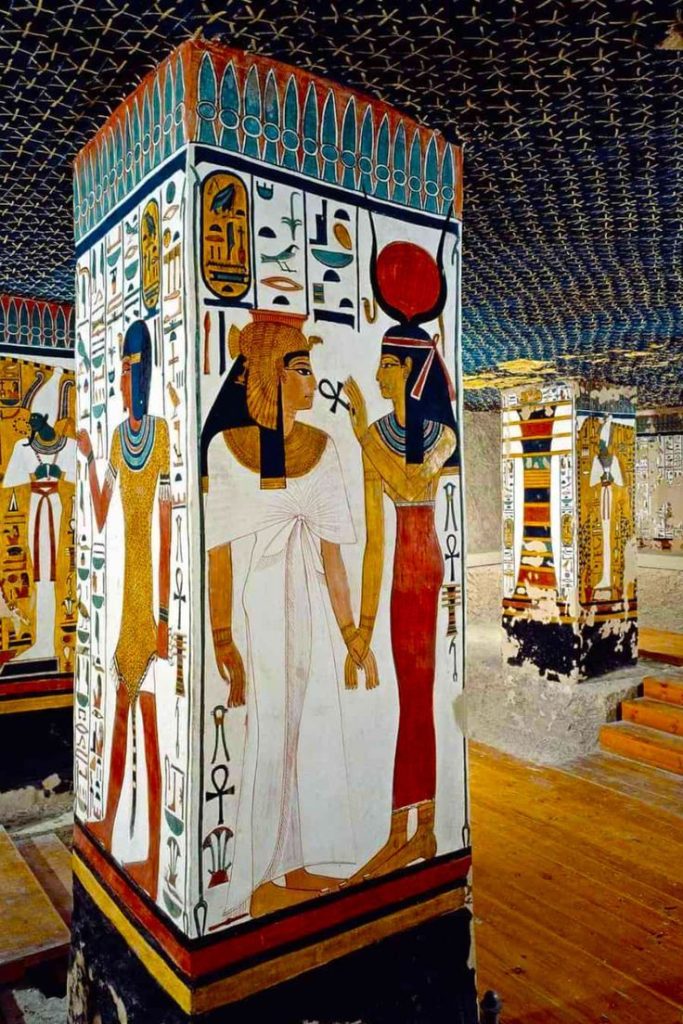
The Tomb of Nefertari (QV66), nestled in the Valley of the Queens, is often described as the crown jewel of New Kingdom tombs. Constructed for Queen Nefertari, the favorite wife of Pharaoh Ramses II, it is celebrated for its breathtaking wall paintings, vibrant colors, and meticulous attention to symbolic detail. Unlike many other tombs, QV66 reflects not only the queen’s status but also the religious beliefs, cultural practices, and artistic innovations of ancient Egypt.
The tomb is a vital cultural and historical landmark, attracting archaeologists, historians, and tourists from around the globe. Visiting it offers an unforgettable glimpse into the luxury, spirituality, and artistry of one of Egypt’s most iconic queens.
Queen Nefertari: Life, Legacy, and Influence
Queen Nefertari, whose name means “Beautiful Companion”, held a unique place in Egyptian history. As the favored wife of Ramses II, she wielded substantial influence in both domestic and diplomatic spheres.
Life of Queen Nefertari
Born in the early 13th century BCE, Nefertari was renowned for her intelligence, beauty, and political significance. She was actively involved in state ceremonies, religious rituals, and likely played a role in diplomatic missions, particularly with neighboring kingdoms. Her prominence is reflected in the grandeur of her tomb, which far surpasses many others in the Valley of the Queens.
Nefertari’s Death and Burial
Following her death, Nefertari was honored with one of the most magnificent tombs ever constructed for a queen. The tomb was designed to ensure her safe passage to the afterlife, as depicted in the vivid religious iconography that covers its walls. Every detail, from hieroglyphics to painted gods, was chosen to protect and guide her soul.
The Valley of the Queens: A Royal Necropolis
Location and Historical Context
The Valley of the Queens, situated on the west bank of the Nile near Luxor, was specifically designated as a burial site for royal women during the New Kingdom. The valley’s dry climate preserved tombs remarkably well, allowing visitors today to witness their original splendor.
Nearby sites include:
- Temple of Hatshepsut – showcasing royal funerary architecture.
- Valley of the Kings – final resting place of Pharaohs, including Ramses II.
Visitor Tip: Combine visits to maximize the cultural experience and appreciate the full scope of New Kingdom tombs.
Architectural Marvel of Tomb QV66
The tomb’s layout was carefully crafted to symbolize Nefertari’s journey from life to eternity.
Entrance and Descending Corridors
The tomb begins with a sloping corridor leading to the burial chambers. The walls here are decorated with protective spells and scenes invoking blessings from gods. The corridors themselves are symbolic of the passage from the mortal world into the divine afterlife.
The Antechamber
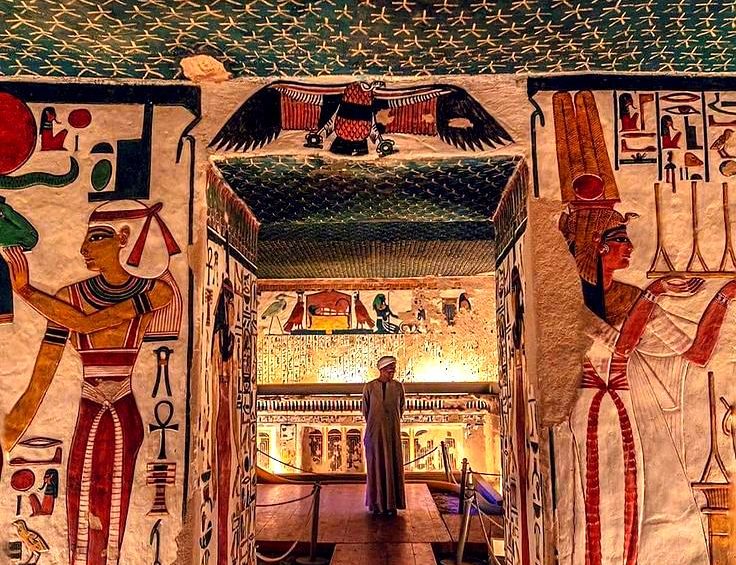
The antechamber serves as a transitional space, featuring murals depicting Nefertari receiving offerings and participating in rituals with deities.
Artistic highlights:
- Vibrant depictions of Hathor, goddess of love and music, welcoming Nefertari.
- Representations of the Book of the Dead, guiding the queen through trials of the underworld.
The Main Burial Chamber
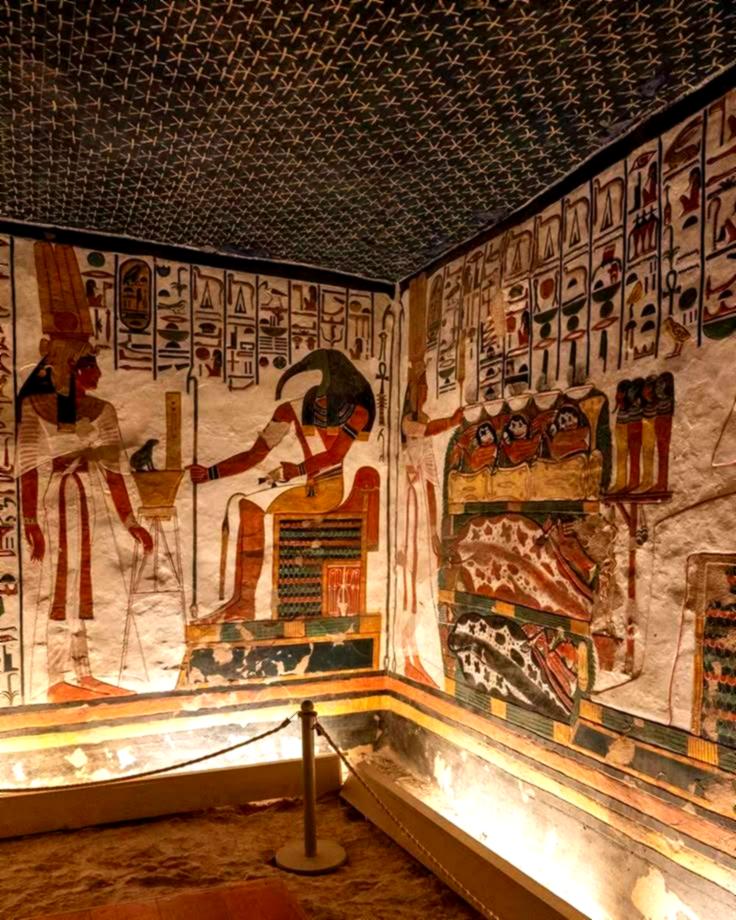
The burial chamber is the tomb’s centerpiece, adorned with some of the finest murals in Egypt.
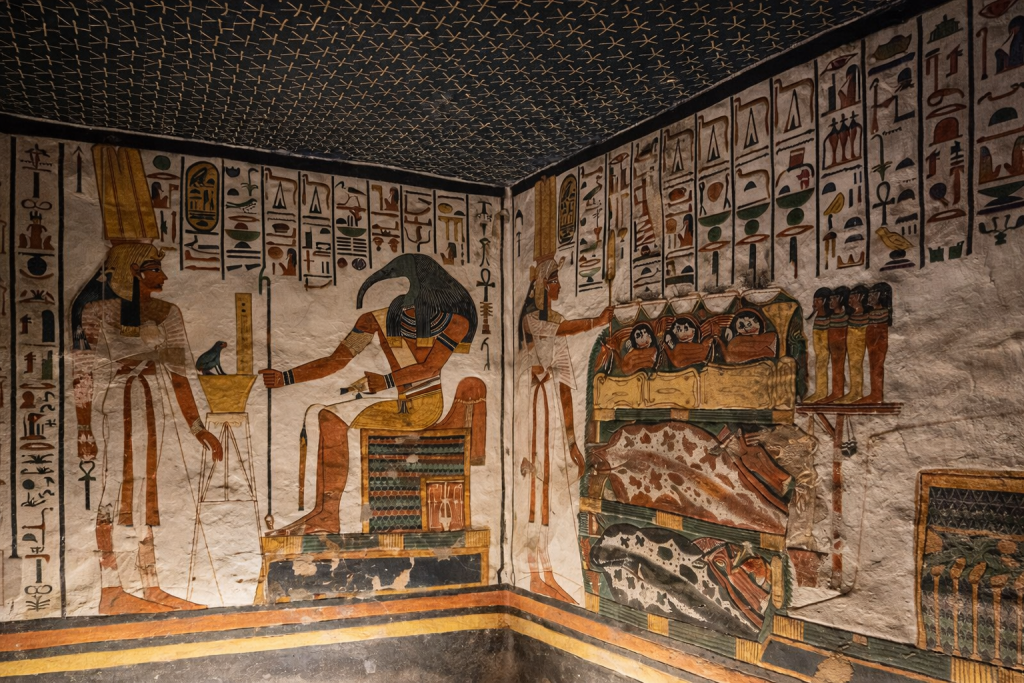
- Ceiling: Celestial motifs representing the night sky and heavens.
- Walls: Scenes depicting Nefertari with Osiris, Ra, and Anubis, emphasizing divine protection.
- Sarcophagus area: Although the original sarcophagus is lost, the murals vividly show her entombment rituals.
Wall Paintings: A Masterpiece of Color and Symbolism
Themes and Interpretations
- Divine Guidance: Gods guiding Nefertari through the afterlife.
- Ritual Offerings: Illustrations of ceremonies ensuring her rebirth.
- Eternal Life: Symbols such as the ankh and lotus flowers represent immortality.
Artistic Techniques
- Pigments: Natural minerals like lapis lazuli, malachite, and ochre.
- Detailing: Fine brushwork to highlight facial expressions and clothing textures.
- Preservation: The tomb’s dry climate helped maintain colors for over 3,000 years.
Mysteries and Legends of Nefertari’s Tomb
Several legends surround QV66, adding to its allure:
- Stories of hidden chambers still undiscovered by archaeologists.
- Ancient inscriptions hinting at ritual secrets for eternal life.
- The tomb’s exceptional beauty inspired poets, historians, and artists for centuries.
Preservation Efforts
The Egyptian government, along with international organizations, has worked tirelessly to preserve QV66.
Efforts include:
- Limiting visitor numbers to reduce wear.
- Installing climate control to protect pigments.
- Periodic restoration of damaged murals using traditional techniques.
Preservation ensures that Nefertari’s tomb remains a symbol of ancient Egyptian cultural heritage.
Visiting the Tomb: Practical Tips
Planning Your Visit
- Tickets: Purchase in advance; photography is restricted.
- Guides: Essential for historical context.
- Timing: Early morning visits avoid crowds and provide better lighting.
Nearby Attractions
- Valley of the Kings
- Temple of Hatshepsut
- Luxor Museum
Travel Tips
- Comfortable shoes for walking on uneven terrain.
- Sun protection: hat, sunscreen, and water.
- Respect cultural norms inside tombs and temples.
Cultural and Historical Impact
The Tomb of Nefertari has influenced:
- Modern Egyptology: Key source of New Kingdom burial practices.
- Art History: Inspiration for painters and architects worldwide.
- Tourism: Boosts Luxor’s economy and global recognition.
Conclusion
The Tomb of Nefertari is a timeless testament to the power, beauty, and spirituality of ancient Egypt. Every painting, symbol, and hieroglyph invites visitors into the queen’s eternal journey. For those exploring Luxor, this tomb is not just a historical site—it is an immersive cultural and artistic experience, reflecting the grandeur of the New Kingdom and the enduring legacy of Queen Nefertari.