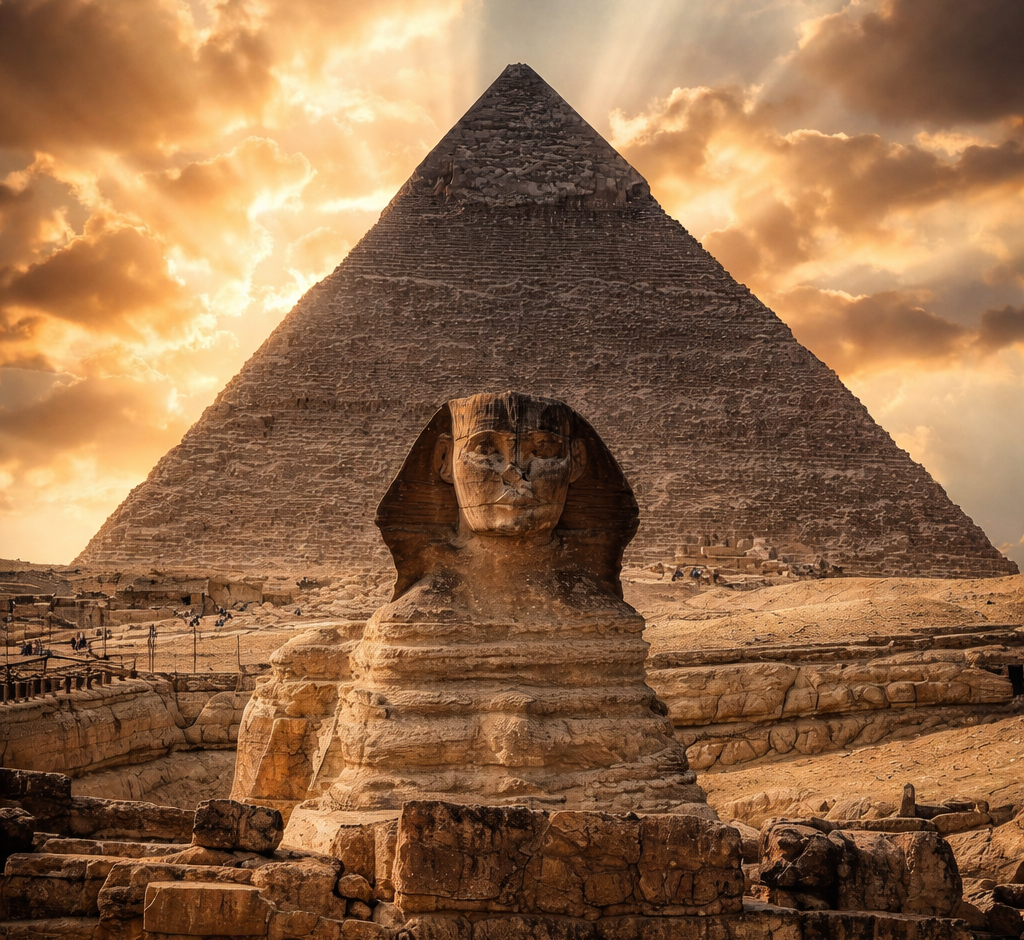
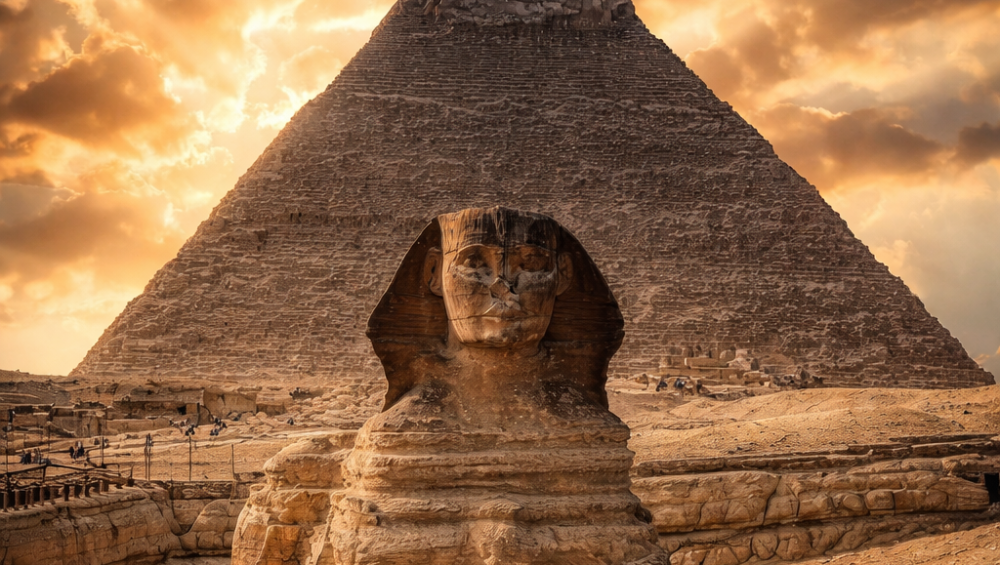
The Great Sphinx of Giza is one of the most mysterious and iconic monuments in the world. Standing proudly on the Giza Plateau, near the famous Pyramids of Giza, the Sphinx has fascinated travelers, historians, and archaeologists for thousands of years.
With the body of a lion and the head of a human, the Great Sphinx represents strength, wisdom, and royal power. Today, it is one of the most visited tourist attractions in Egypt and a must-see landmark for anyone exploring ancient Egyptian civilization.
Where Is the Great Sphinx of Giza Located?
The Great Sphinx is located on the eastern side of the Giza Pyramid Complex, just a short distance from:
- The Great Pyramid of Khufu
- The Pyramid of Khafre
- The Pyramid of Menkaure
Its location makes it an essential stop on all Giza pyramids tours and Cairo sightseeing tours.
History of the Great Sphinx
The Great Sphinx is believed to have been built around 2500 BC, during the reign of Pharaoh Khafre of the Fourth Dynasty.
Most Egyptologists agree that:
- The face of the Sphinx represents Pharaoh Khafre
- The monument served as a guardian of the pyramids
- It symbolized divine protection and royal authority
Despite extensive research, many aspects of the Sphinx’s history remain a mystery, adding to its global fascination.
What Does the Great Sphinx Represent?
The Sphinx combines two powerful symbols:
- The lion’s body: strength, protection, and power
- The human head: intelligence, wisdom, and leadership
In ancient Egyptian culture, this combination represented the divine role of the pharaoh as both ruler and protector of the land.
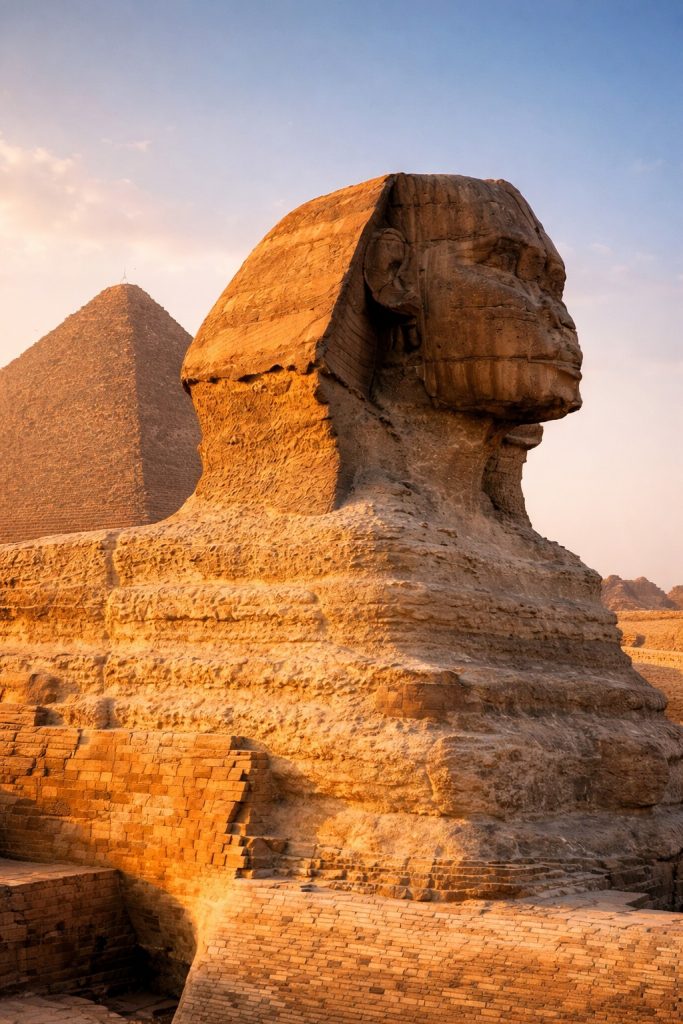
How Big Is the Great Sphinx of Giza?
The Great Sphinx is one of the largest stone statues in the world:
- Length: approximately 73 meters
- Height: around 20 meters
- Width: about 19 meters
It was carved directly from limestone bedrock, making its construction even more impressive.
Secrets and Mysteries of the Sphinx
The Great Sphinx is surrounded by legends and unanswered questions:
Missing Nose Mystery
One of the most common questions is:
“Who broke the nose of the Sphinx?”
Contrary to popular myths, historical evidence suggests the damage occurred centuries ago, long before Napoleon’s time.
Hidden Chambers
Many believe there are:
- Secret tunnels beneath the Sphinx
- Hidden chambers connected to the pyramids
While some underground passages exist, no confirmed hidden libraries or treasure rooms have been discovered.
The Sphinx and the Sun
Some researchers believe the Sphinx was aligned with the rising sun, reinforcing its spiritual and cosmic significance in ancient Egyptian religion.
This theory strengthens the idea that the Sphinx played an important ceremonial role beyond being just a statue.
Visiting the Great Sphinx of Giza
Opening Hours
- Daily from 8:00 AM to 5:00 PM
- Best visited early morning or before sunset
Entrance Information
- Included in the general Giza Plateau entrance ticket
- Accessible through organized tours or private guides
Most travelers prefer private Egypt tours to fully understand the symbolism and history of the Sphinx.
Is It Safe to Visit the Great Sphinx?
Yes, the Sphinx area is considered safe for tourists. The site is protected by:
- Tourism police
- Official security staff
- Licensed tour operators
Visiting with a professional guide enhances both safety and experience.
Best Time to Visit the Great Sphinx
The best time to visit is:
- October to April for pleasant weather
- Early morning for fewer crowds and better photos
Summer visits are possible but recommended during cooler hours.
Why the Great Sphinx Is a Must-See Attraction
The Great Sphinx of Giza is more than just a statue—it is a symbol of Egypt’s ancient greatness and enduring mystery. Standing face to face with the Sphinx is an unforgettable experience that connects visitors directly to the heart of ancient Egyptian history.
No trip to Egypt is complete without visiting this legendary monument.