
Edfu Temple Egypt – The Magnificent Temple of Horus on the Nile
Introduction to Edfu Temple
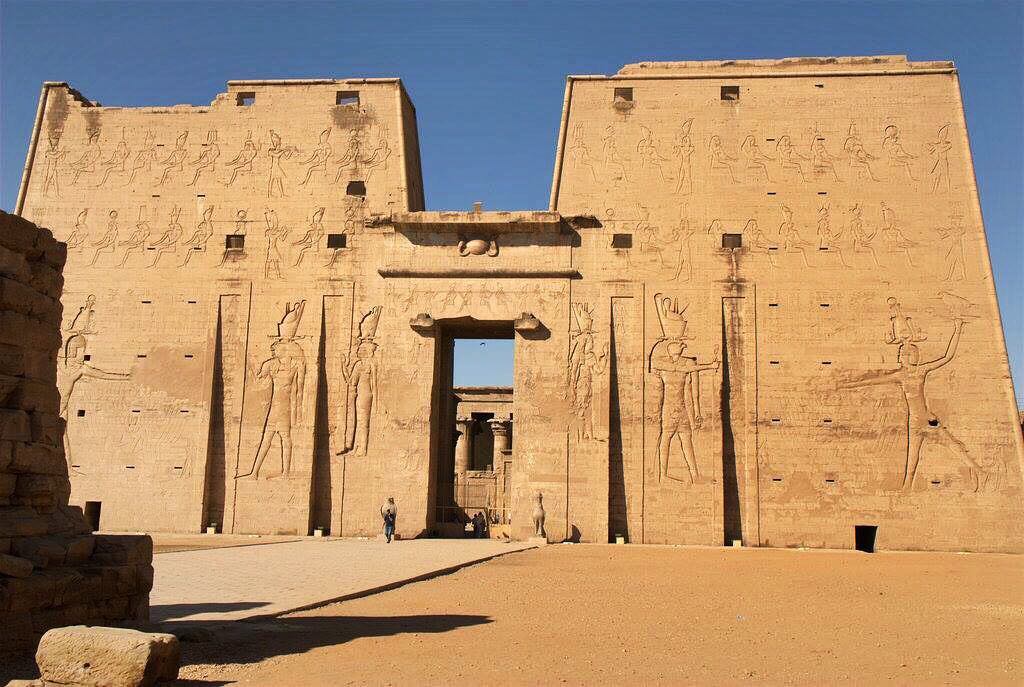
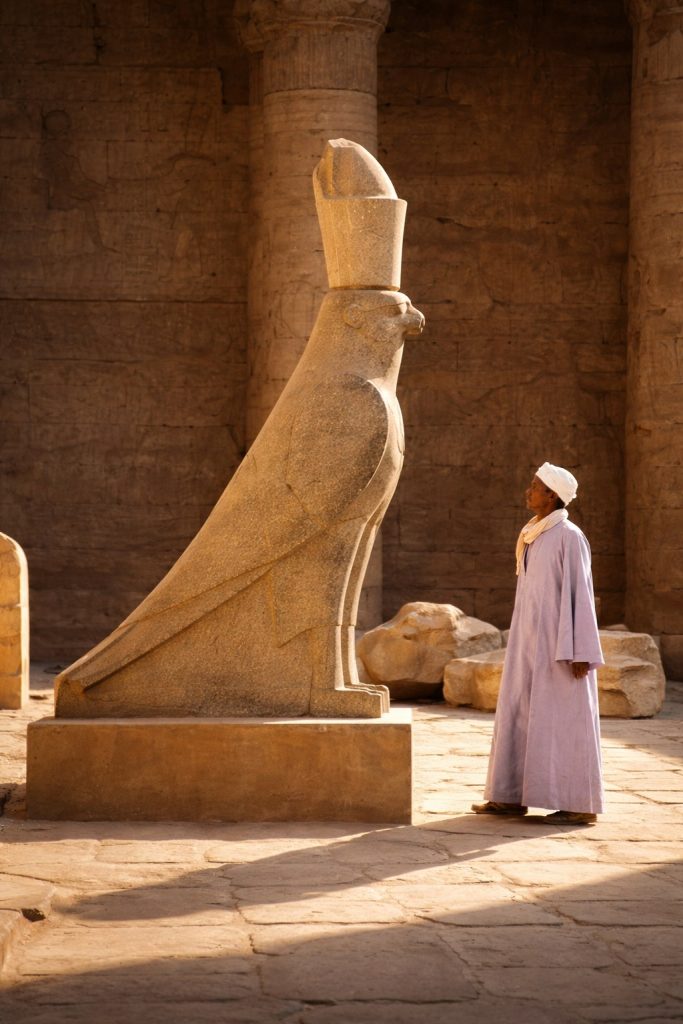
Located between Luxor and Aswan on the west bank of the Nile River, Edfu Temple stands as one of the best-preserved ancient Egyptian temples in the entire country. Dedicated to Horus, the falcon-headed god of protection and kingship, this extraordinary monument offers visitors a rare chance to experience a nearly intact temple from ancient times.
Unlike many other temples in Egypt that were damaged by time, invasions, or natural disasters, Edfu Temple remained buried under layers of sand and silt for centuries. This accidental preservation protected its walls, reliefs, and inscriptions, allowing modern visitors to witness its grandeur almost exactly as ancient Egyptians did over 2,000 years ago.
The Historical Background of the Temple of Horus at Edfu
Construction During the Ptolemaic Period
Edfu Temple was constructed during the reign of Ptolemy III in 237 BC and completed in 57 BC under Ptolemy XII. Although it was built during the Greek Ptolemaic dynasty, the architectural style strictly follows traditional ancient Egyptian temple design.
The Ptolemies understood that maintaining Egyptian religious traditions helped legitimize their rule. Therefore, they invested heavily in building temples dedicated to powerful deities like Horus.
Why Horus Was So Important
Horus was one of the most significant gods in ancient Egyptian mythology. He symbolized kingship, divine protection, and victory over chaos. According to myth, Horus avenged his father Osiris by defeating Seth, the god of disorder. This eternal struggle symbolized the triumph of order over chaos.
Edfu was considered the sacred site where Horus defeated Seth, making it a highly important pilgrimage destination in antiquity.
Architectural Layout of Edfu Temple
Edfu Temple covers approximately 7,000 square meters and follows the classic layout of Egyptian temples.
The Massive Pylon Entrance
The temple begins with a monumental pylon rising about 36 meters high. These twin towers are decorated with dramatic reliefs showing the king smiting his enemies before Horus. The pylon served both symbolic and ceremonial functions.
The Open Courtyard
Beyond the pylon lies a spacious courtyard surrounded by columns. This was where public religious ceremonies were performed. The courtyard allowed sunlight to illuminate sacred rituals.
The Hypostyle Hall
The hypostyle hall contains towering columns decorated with floral capitals. The ceiling once represented the sky, painted with stars and astronomical scenes. Only priests and royalty were allowed beyond this point.
The Sanctuary
At the heart of the temple lies the sanctuary, the most sacred area. Here stood the golden statue of Horus. The granite naos that still survives today once housed the divine image.

Religious Rituals and Festivals
The Beautiful Feast of the Reunion
One of the most famous ceremonies associated with Edfu Temple was the annual reunion festival between Horus of Edfu and Hathor of Dendera. During this event, Hathor’s statue traveled from Dendera to Edfu by boat along the Nile.
The festival symbolized divine marriage and cosmic harmony.
The Myth of Horus and Seth Depicted on the Walls
The walls of Edfu Temple are covered with detailed inscriptions describing the battle between Horus and Seth. These texts are among the most complete mythological records from ancient Egypt.
Scenes depict:
- Naval battles
- Ritual hunts
- Symbolic purification ceremonies
These inscriptions are crucial for modern Egyptologists studying ancient religion.
Rediscovery of Edfu Temple in the 19th Century
For centuries, the temple was buried under desert sand and mud-brick houses. In 1860, French Egyptologist Auguste Mariette began excavating the site.
The removal of sand revealed one of the most complete temple structures in Egypt.
Why Edfu Temple Is One of the Best-Preserved Temples in Egypt
Unlike temples such as Karnak or Luxor, Edfu Temple remained protected beneath sand deposits. As a result:
- Wall carvings are sharp and clear.
- Ceilings retain original details.
- Architectural structure is almost intact.
This makes it one of the finest examples of Ptolemaic temple architecture in Egypt.
Visiting Edfu Temple Today
Location and Accessibility
Edfu Temple is located about:
- 60 km north of Aswan
- 110 km south of Luxor
It is commonly visited as part of Nile cruises between Luxor and Aswan.
Best Time to Visit
Early morning visits are ideal to avoid crowds and heat. Winter months (October to April) offer the most comfortable temperatures.
Travel Tips for Visitors
- Wear comfortable shoes
- Bring water
- Hire a knowledgeable guide
- Visit during Nile cruise stops
Edfu Temple vs Other Egyptian Temples
Compared to:
- Karnak Temple (larger but more ruined)
- Philae Temple (romantic island setting)
- Abu Simbel (monumental statues)
Edfu Temple stands out for preservation and complete architectural layout.
The Importance of Edfu Temple in Modern Tourism
Edfu Temple plays a major role in Nile cruise tourism. It offers visitors a complete understanding of temple structure, religious practice, and mythological storytelling.
Conclusion
Edfu Temple is not merely an ancient ruin; it is a time capsule preserving the religious, political, and artistic achievements of ancient Egypt. From its towering pylons to its sacred sanctuary, every stone tells a story of devotion, power, and mythology.
For travelers exploring Upper Egypt, the Temple of Horus at Edfu is an essential stop that combines architectural brilliance, historical depth, and mythological richness in one unforgettable experience.