Kom Ombo Temple – A Unique Double Temple on the Nile
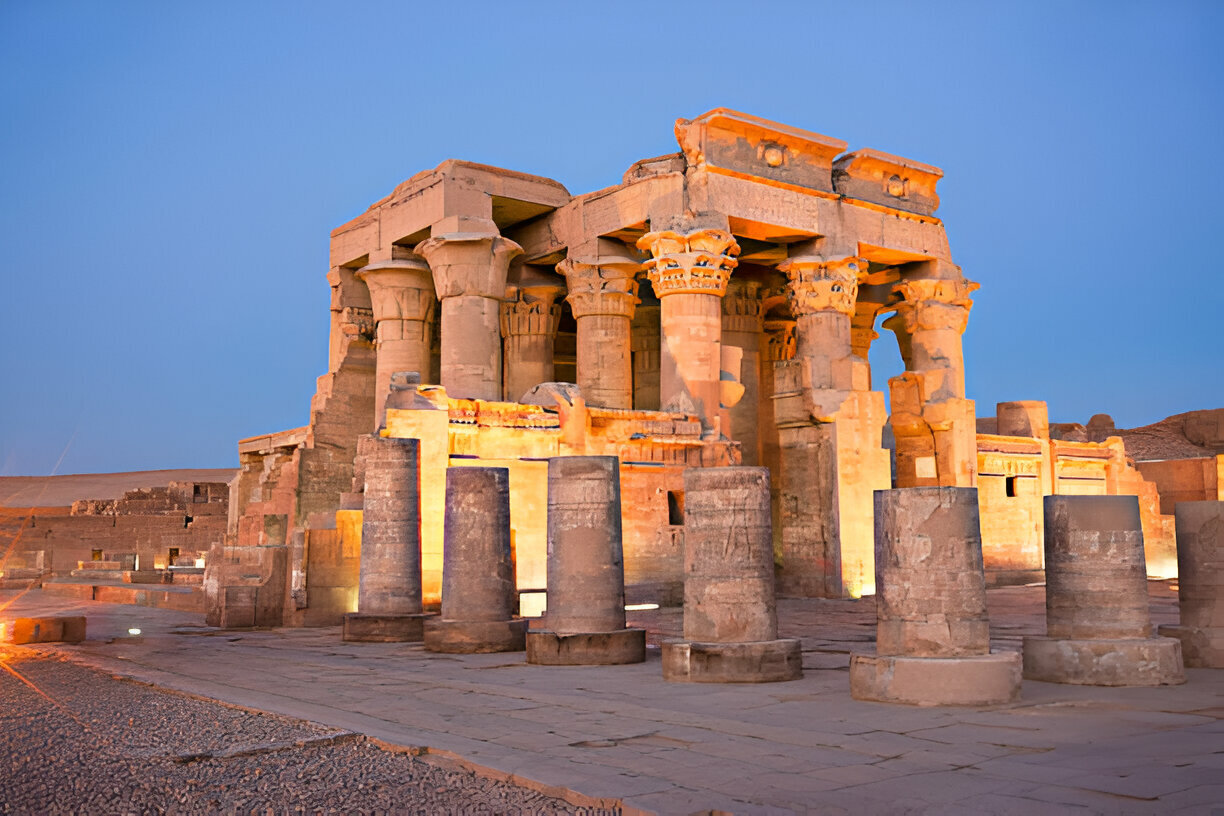
The Kom Ombo Temple is one of Egypt’s most remarkable and unique historical sites. Unlike most temples, it is a double temple, built to honor two gods simultaneously: Sobek, the crocodile god associated with fertility and the Nile, and Haroeris (Horus the Elder), the falcon-headed sky god symbolizing protection and kingship.
Situated on the eastern bank of the Nile River, the temple was constructed during the Ptolemaic Dynasty (180–47 BC), with additions from the Roman period. Its symmetrical design reflects its dual dedication, making it unlike any other temple in Egypt.
This article will guide you through the temple’s history, architecture, religious significance, and what visitors can explore today.

Historical Background of Kom Ombo Temple
The Kom Ombo Temple’s history is rich and layered. The site was considered sacred long before the Ptolemaic period, with early shrines dedicated to Sobek. The Ptolemies expanded the temple to create the double temple structure.
- Sobek: Worshiped as the god of fertility, water, and crocodiles. Sobek protected the pharaoh and ensured the prosperity of the Nile.
- Haroeris (Horus the Elder): Represented the sky, kingship, and divine protection.
The dual dedication reflects the Egyptian concept of balance — between chaos and order, water and land, fertility and power.
Over centuries, the temple saw renovations and additions from Roman rulers who also revered Sobek, demonstrating the temple’s long-lasting religious importance.
Kom Ombo Temple Architecture and Layout
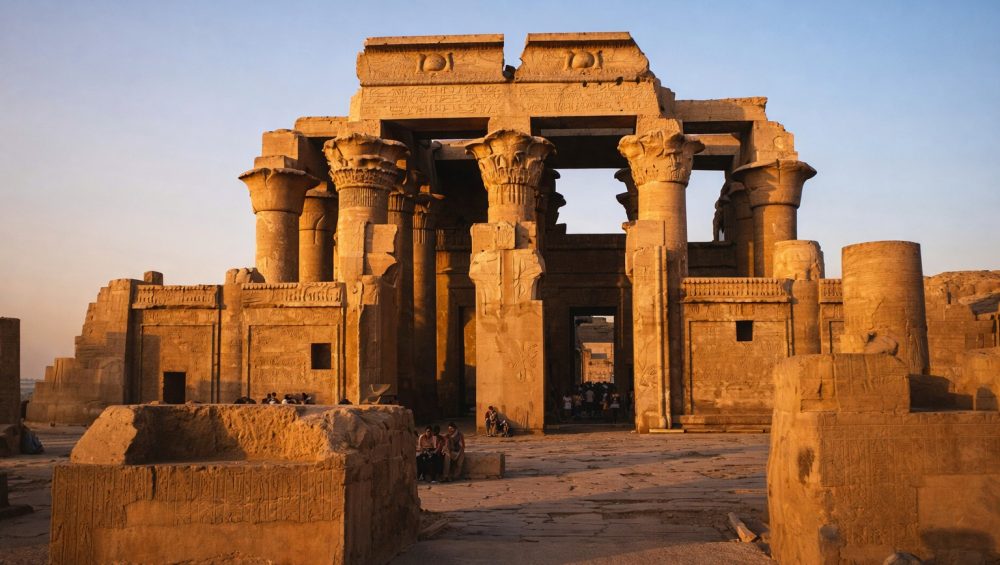
The architecture of Kom Ombo is a masterpiece of Ptolemaic design. Its symmetry is immediately visible from the entrance: the temple has twin entrances, halls, sanctuaries, and chapels, one for each god.
Twin Entrances and Hypostyle Halls
Each entrance leads to a hypostyle hall filled with intricately carved columns. The carvings depict pharaohs, gods, and ritual scenes. The twin halls are mirror images, emphasizing the dual worship.
Sanctuaries and Chapels
The temple contains two main sanctuaries at its rear, each housing a statue of Sobek and Haroeris. Smaller chapels and rooms surround the sanctuaries for offerings and religious rituals.
Reliefs and Wall Carvings
Kom Ombo Temple is famous for its detailed reliefs, including:
- Pharaohs making offerings to Sobek and Haroeris
- Crocodiles and falcons in hieroglyphics
- Depictions of medical tools and procedures, showing ancient Egyptian medical knowledge
- Scenes of daily life and ritual practices
These carvings make Kom Ombo a cultural and educational treasure as well as a religious site.
The Crocodile Museum
Located near the temple, the Crocodile Museum preserves dozens of mummified crocodiles, sacred to Sobek. These crocodiles were offered as part of religious ceremonies.
Visitors can also see:
- Clay and bronze crocodile statues
- Ancient artifacts related to Sobek worship
- Insights into the Ptolemaic religious practices
The museum enhances the temple experience by connecting the ancient myths to tangible artifacts.
Religious Significance of Kom Ombo Temple
The temple’s religious significance is profound.
- Sobek ensured the fertility of the land and the prosperity of the Nile.
- Haroeris represented protection and divine kingship.
- Dual worship emphasized the balance between opposing forces in Egyptian belief systems.
The temple also served as a medical center, with depictions of surgical instruments carved into the walls. This highlights the scientific knowledge of the time, linking religion with medicine.
Visiting Kom Ombo Temple Today
Kom Ombo Temple is accessible and ideal for tourists exploring Upper Egypt.

How to Get There
- Located 45 km north of Aswan, reachable by car, bus, or Nile cruise.
- Many Nile cruises include Kom Ombo as a stop along the river, providing scenic views and convenient access.
Best Time to Visit
- Early morning or late afternoon for cooler weather
- Sunset visits offer beautiful Nile reflections
Highlights for Tourists
- Twin sanctuaries of Sobek and Haroeris
- Wall reliefs showing ancient Egyptian life
- Crocodile Museum
- Stunning views of the Nile
Fun Facts About Kom Ombo Temple
- It is one of the few double temples in Egypt.
- The temple features ancient surgical instruments carved on the walls.
- Sobek was both feared and revered, as crocodiles were dangerous but sacred.
- Mummified crocodiles were buried near the temple as offerings.
- The temple was later used and modified by Roman rulers.
Kom Ombo Temple in Modern Culture
The temple is not only a tourist attraction but also an important archaeological and cultural site.
- Many films and documentaries feature Kom Ombo because of its unique architecture.
- Archaeologists continue to study its reliefs to understand ancient Egyptian medicine and rituals.
Tips for Visitors
- Wear comfortable shoes for walking around the temple complex
- Bring water, especially in summer
- Hire a local guide to understand the symbolism and history
- Visit the Crocodile Museum for a complete experience
Conclusion
The Kom Ombo Temple is a rare gem in Egypt. Its double dedication, intricate architecture, fascinating reliefs, and crocodile lore make it a must-see for travelers, historians, and culture enthusiasts alike. A visit to Kom Ombo offers insight into the religious, medical, and social practices of ancient Egypt while providing a breathtaking view of the Nile.