the Roman Theatre of Alexandria
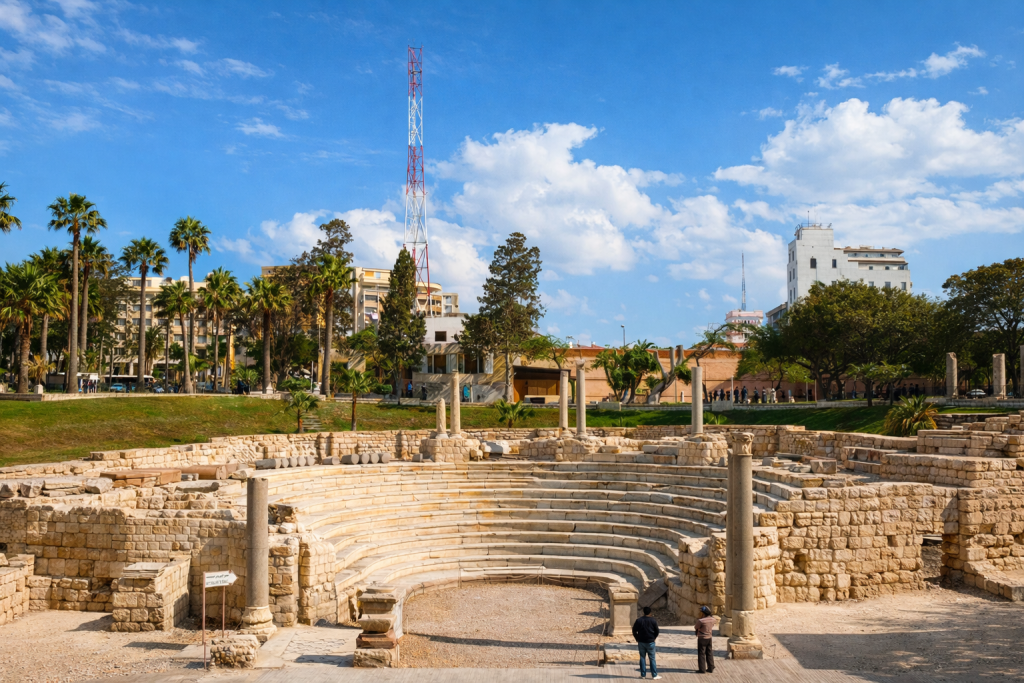
The Roman Theatre of Alexandria is one of the most remarkable archaeological landmarks in Egypt and a unique example of Roman architecture in the Mediterranean region. Located in the heart of Alexandria, this ancient theatre reflects the cultural richness and historical importance of the city during the Greco-Roman period. As the only Roman theatre discovered in Egypt so far, it holds exceptional archaeological and touristic value.
Today, the Roman Theatre of Alexandria is a must-visit destination for travelers interested in history, ancient architecture, and cultural tourism.
Location of the Roman Theatre in Alexandria
The Roman Theatre is situated in the Kom El Dikka archaeological area, near Raml Station in central Alexandria. Its strategic location highlights the importance of this district during Roman rule, as it was once a vibrant residential and cultural center.
Kom El Dikka is surrounded by other historical attractions, making the Roman Theatre an essential stop on any Alexandria historical tour.
Discovery and Excavation History
The Roman Theatre of Alexandria was discovered by accident in 1960 during excavation work intended to build residential complexes. Archaeologists soon realized the historical significance of the site, leading to extensive excavations that revealed a complete Roman theatre along with surrounding Roman-era structures.
The discovery provided invaluable insights into daily life, entertainment, and urban planning in ancient Alexandria during Roman times.
Historical Background
The Roman Theatre dates back to the 4th century AD, during the late Roman period. It was constructed when Alexandria was a major cultural and administrative center of the Roman Empire.
Although initially believed to be a traditional Roman theatre for dramatic performances, later studies suggested that the structure may have also served as:
- A music hall (Odeon)
- A meeting place for scholars
- A venue for poetry readings and lectures
This reflects Alexandria’s long-standing reputation as a center of learning and intellectual exchange.
Architectural Design and Structure
The Roman Theatre of Alexandria is an architectural masterpiece showcasing Roman engineering excellence combined with local influences.
Key Architectural Features:
- Seating Rows: The theatre consists of 13 semicircular marble seating rows arranged around the stage.
- Capacity: It could accommodate approximately 600 to 800 spectators.
- Material: White and gray marble imported from different regions.
- Orchestra: A paved area used for performances and gatherings.
- Stage Area: Designed to enhance acoustics and visibility.
The design ensured excellent sound quality, allowing performances to be heard clearly throughout the theatre.
The Surrounding Complex at Kom El Dikka
The Roman Theatre is part of a larger archaeological complex that includes:
- Roman villas
- Public baths
- Lecture halls
- Mosaic floors
- Underground cisterns
These remains indicate that Kom El Dikka was a prestigious residential district for wealthy citizens and intellectuals during the Roman era.
Cultural and Social Importance
Entertainment played a vital role in Roman society, and theatres were central to social life. The Roman Theatre of Alexandria hosted various cultural activities, including:
- Musical performances
- Dramatic plays
- Public speeches
- Educational gatherings
This highlights Alexandria’s dual identity as both a political hub and an intellectual capital of the ancient world.
The Roman Theatre vs. Greek Theatres
Unlike traditional Greek theatres built into hillsides, the Roman Theatre of Alexandria was constructed on flat land using advanced engineering techniques. This allowed for:
- Greater architectural flexibility
- More elaborate decorative elements
- Enhanced acoustics
The theatre’s semicircular shape and marble construction distinguish it from earlier Hellenistic designs.
Preservation and Restoration
Over the years, the Roman Theatre of Alexandria has undergone multiple restoration efforts to preserve its structure and protect it from environmental damage. The Egyptian Ministry of Tourism and Antiquities has worked to maintain the site while keeping it accessible to visitors.
These efforts ensure that the theatre remains one of the best-preserved Roman monuments in Egypt.
Visiting the Roman Theatre of Alexandria
The Roman Theatre is open to visitors year-round and is easily accessible from major parts of the city.
Visitor Tips:
- Best visited in the morning or late afternoon
- Ideal for history lovers and photographers
- Combine your visit with Kom El Dikka ruins
- Wear comfortable shoes due to uneven ground
Guided tours are recommended for a deeper understanding of the site’s historical context.
The Roman Theatre as a Tourist Attraction
The Roman Theatre of Alexandria attracts both local and international tourists. It is a key stop on:
- Alexandria city tours
- Cultural and archaeological tours
- Educational trips
Its central location makes it a convenient and enriching experience for visitors exploring Alexandria’s ancient heritage.
Interesting Facts About the Roman Theatre
- It is the only Roman theatre discovered in Egypt
- Built primarily from marble, unlike many other Roman theatres
- Possibly used as an Odeon rather than a traditional theatre
- Part of a larger Roman residential complex
The Role of the Roman Theatre in Alexandria’s History
The Roman Theatre stands as a powerful symbol of Alexandria’s multicultural past, where Greek, Roman, and Egyptian influences merged. It reflects the city’s role as a bridge between civilizations and a hub for art, education, and governance.
Conclusion
The Roman Theatre of Alexandria is more than an ancient structure; it is a living testament to the city’s historical depth and cultural diversity. As one of the most important Roman monuments in Egypt, it offers visitors a unique opportunity to explore the artistic and intellectual life of ancient Alexandria.
Whether you are a history enthusiast, a cultural traveler, or a first-time visitor, the Roman Theatre of Alexandria is an essential landmark that captures the spirit of the ancient Mediterranean world.