The Hatshepsut Temple in Luxor is one of the most breathtaking architectural masterpieces of Ancient Egypt. Located on the West Bank of Luxor near the Valley of the Kings, the Mortuary Temple of Hatshepsut stands as a powerful symbol of royal ambition, divine authority, and architectural innovation.
If you are planning a trip to Luxor or researching ancient Egyptian temples, this complete guide to the Temple of Hatshepsut will provide everything you need to know — from history and architecture to tickets, location, and travel tips.
Where is Hatshepsut Temple Located?
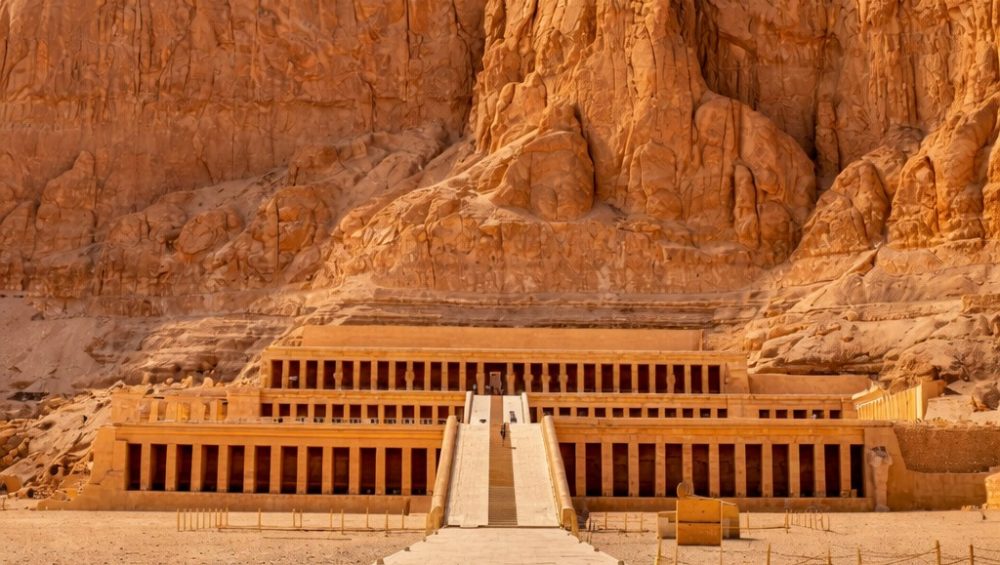
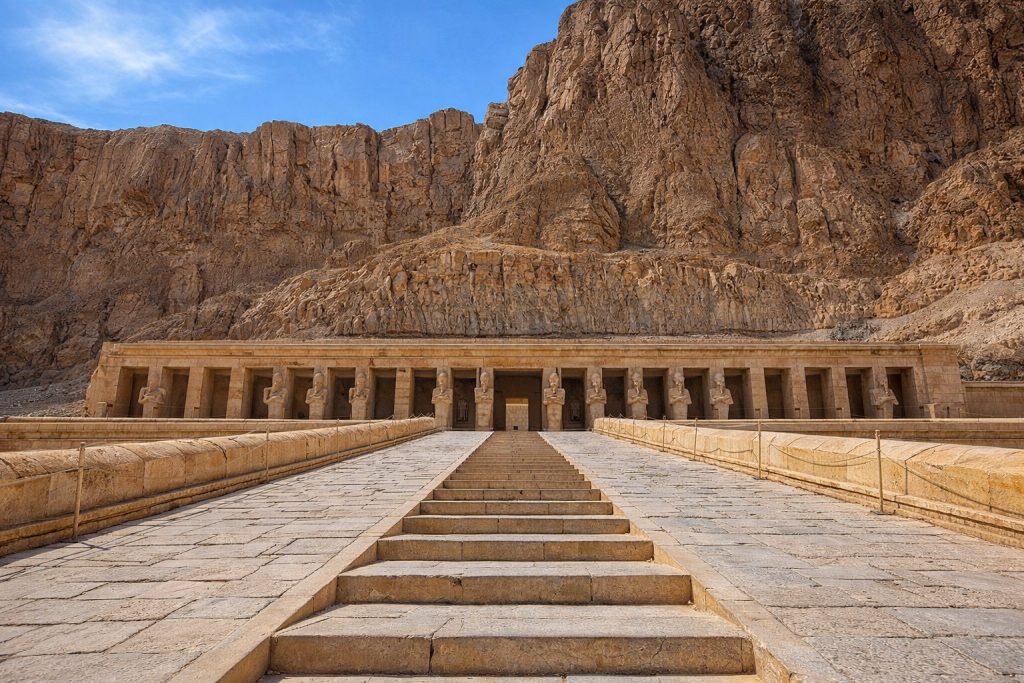
The Temple of Hatshepsut is located in Deir el-Bahari on the Luxor West Bank, opposite the modern city of Luxor (ancient Thebes). It is situated dramatically at the base of towering limestone cliffs, creating one of the most iconic landscapes in Egypt.
The temple is only a short drive from:
- Valley of the Kings
- Valley of the Queens
- Colossi of Memnon
Its strategic location connects it directly to other major Luxor historical sites, making it an essential stop on any West Bank tour.
Who Was Queen Hatshepsut?
The Female Pharaoh of Ancient Egypt
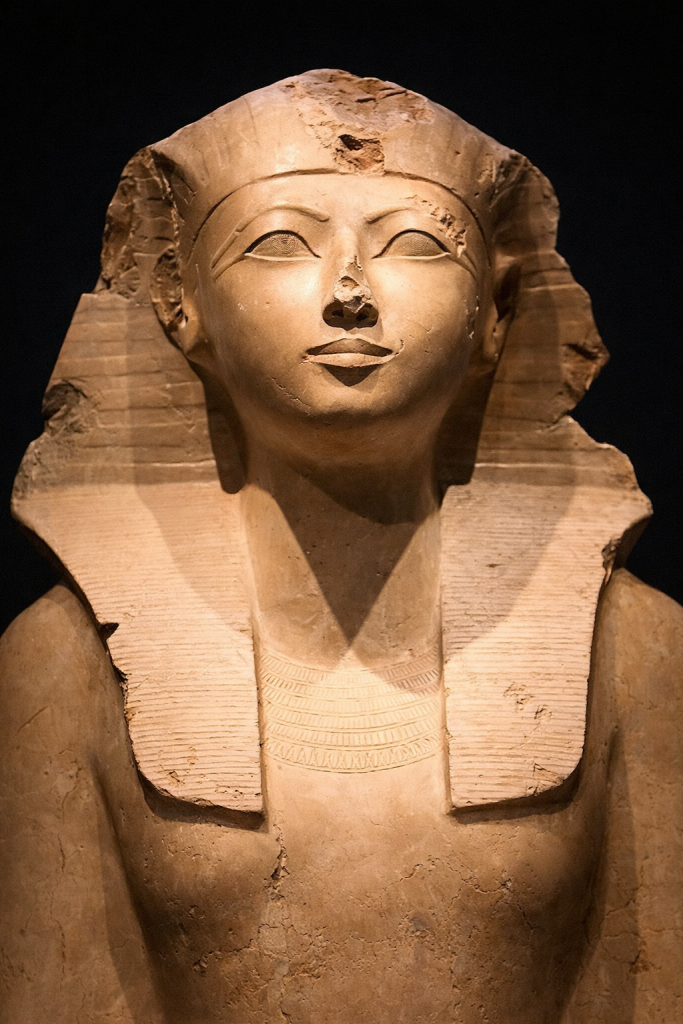
Queen Hatshepsut was one of the most powerful and successful rulers of Ancient Egypt. She ruled during the 18th Dynasty (around 1479–1458 BC).
Unlike most royal women, Hatshepsut declared herself Pharaoh — not just queen. She even adopted traditional male pharaonic symbols, including:
- The royal false beard
- Male royal attire
- Pharaoh titles
Her reign was marked by peace, prosperity, and massive construction projects, including the magnificent Hatshepsut Temple.
Why Was the Mortuary Temple of Hatshepsut Built?
Religious Purpose
The Hatshepsut Temple was built as a mortuary temple, meaning it was designed for:
- Worship after her death
- Religious rituals
- Honoring the god Amun
Ancient Egyptians believed the soul required offerings and ceremonies to live in the afterlife. This temple ensured Hatshepsut’s eternal legacy.
Political Purpose
The temple also served a political role. Through reliefs and inscriptions, Hatshepsut:
- Claimed divine birth
- Showed support from the gods
- Strengthened her legitimacy as a female ruler
This makes the Temple of Hatshepsut not only religious but also deeply political.
Architecture of Hatshepsut Temple
A Revolutionary Design
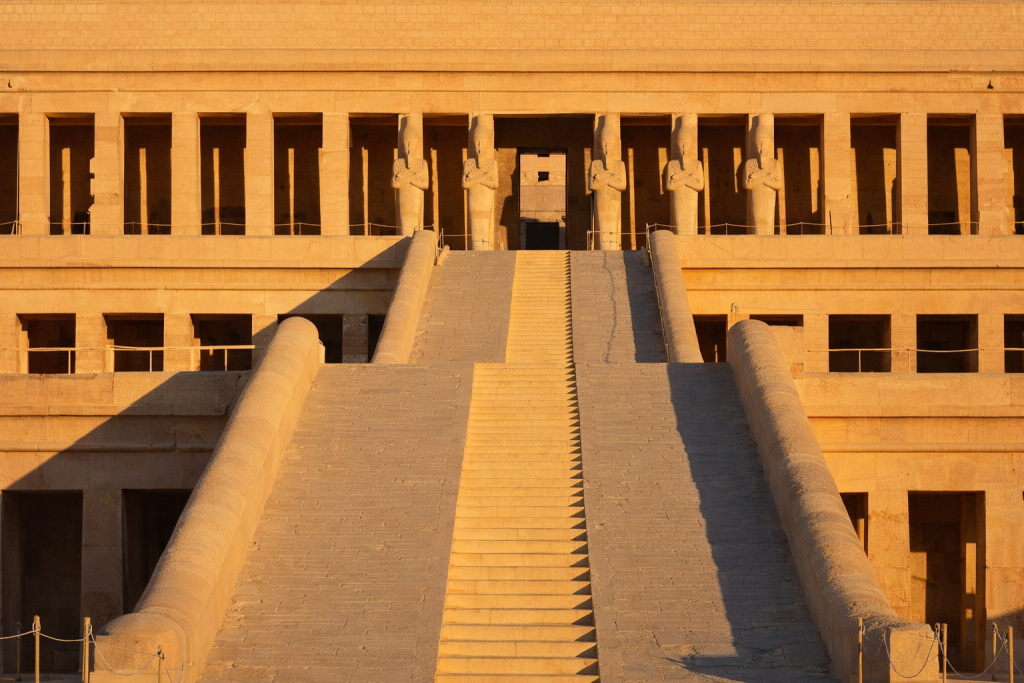
Unlike traditional Egyptian temples, the Hatshepsut Temple features:
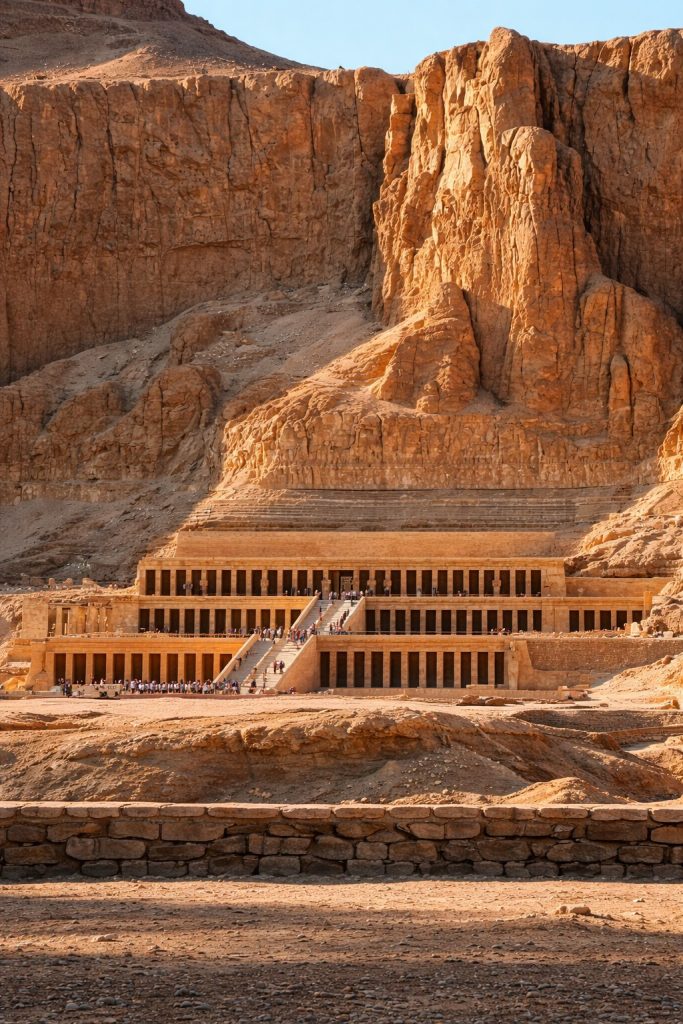
- Three massive terraces
- Colonnaded porticoes
- Long ramps connecting levels
- Symmetry with the surrounding cliffs
The architect Senenmut designed the temple to blend naturally into the mountain backdrop.
The Three Terraces Explained
First Terrace
The lower courtyard once had gardens filled with:
- Exotic trees
- Myrrh plants
- Decorative pools
It symbolized fertility and divine blessing.
Second Terrace
The second level contains famous reliefs showing:
- The Divine Birth of Hatshepsut
- The Expedition to the Land of Punt
These carvings are among the most important historical records in Ancient Egypt.
Third Terrace
The upper terrace includes:
- Sanctuary of Amun
- Solar court
- Chapels dedicated to Anubis and Hathor
This was the most sacred part of the temple.
The Expedition to Punt
One of the most fascinating stories carved into the Temple of Hatshepsut walls is the expedition to the Land of Punt.
This trade mission brought:
- Gold
- Ebony
- Ivory
- Exotic animals
- Incense trees
The detailed reliefs show ships, foreign lands, and even the Queen of Punt — offering rare insight into ancient trade relations.
Divine Birth Reliefs
The temple walls illustrate a powerful message:
Hatshepsut claimed she was the daughter of the god Amun.
These scenes show:
- Amun visiting her mother
- Her divine conception
- Gods blessing her rule
This was a strategic move to strengthen her authority as Pharaoh.
Hatshepsut Temple and the Valley of the Kings
Although located near the Valley of the Kings, the Hatshepsut Temple is a separate site.
- The Valley of the Kings was for royal tombs.
- The Temple of Hatshepsut was for worship and rituals.
Her actual tomb (KV20) is located inside the Valley of the Kings.
Destruction and Restoration
After her death, her stepson Thutmose III attempted to erase her legacy.
Many statues were destroyed and her name was removed from monuments.
However, modern archaeology restored much of the Hatshepsut Temple Luxor site. Today, it stands as one of Egypt’s best-preserved temples.
Visiting Hatshepsut Temple Today
Opening Hours
Usually open daily from early morning until late afternoon.
Best Time to Visit
Early morning is ideal to:
- Avoid crowds
- Escape the heat
- Capture stunning photos
Ticket Information
Tickets are purchased separately or included in West Bank tours.
Why Hatshepsut Temple is Unique
- Built by a female Pharaoh
- Unique architectural harmony with nature
- Historical reliefs of international trade
- Political propaganda carved in stone
- One of the most photogenic temples in Egypt
It represents power, ambition, intelligence, and divine kingship.
Photography Tips
- Visit during sunrise for golden lighting.
- Capture wide-angle shots to show scale.
- Include the cliffs in background frames.
Travel Tips for Luxor Visitors
When planning your Luxor tour:
- Combine Hatshepsut Temple with Valley of the Kings
- Bring water and sunscreen
- Wear comfortable walking shoes
- Hire a licensed guide for deeper understanding
Frequently Asked Questions About Hatshepsut Temple
Is Hatshepsut Temple worth visiting?
Absolutely. It is one of the top attractions in Luxor West Bank.
How long does a visit take?
Approximately 1–2 hours.
Is it close to the Valley of the Kings?
Yes, only a few minutes by car.
Final Thoughts: Why You Should Visit Hatshepsut Temple
The Temple of Hatshepsut is more than stone and columns. It is a story of ambition, power, and resilience.
For travelers exploring Ancient Egyptian temples, visiting Hatshepsut Temple Luxor is an unforgettable experience.
It remains one of the greatest architectural achievements in Egypt and a must-see destination for anyone interested in history, culture, and royal legacy.